
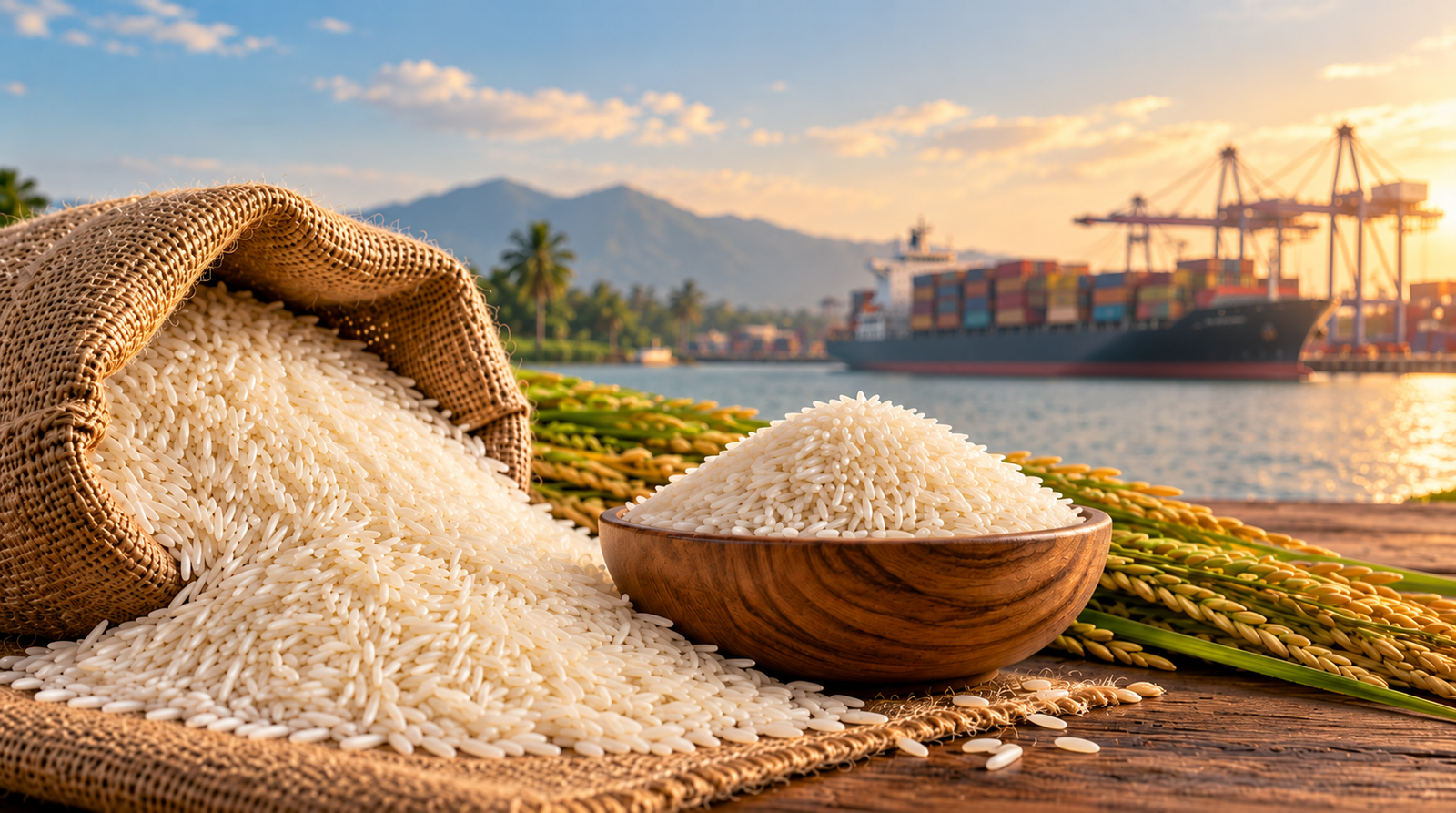
Two rice exporters in Pakistan may offer the same 1121 Basmati variety, yet their quotations can differ in grain quality, packing, and shipping terms. One may offer rice with a maximum of 5% broken grains, while another allows 10%, which can affect the finished product and the price an importer is willing to pay.
Pakistan has established rice mills, processing businesses, and agricultural export companies supplying different international markets. Their offerings cover premium Basmati varieties, non-Basmati rice, wholesale orders, and retail packaging, giving buyers several options based on their needs.
For an importer, the main task is finding a company that can supply the required rice grade under clear commercial terms. This guide examines six Pakistani rice export companies, recent trade figures, the main product differences, and the checks that matter before placing a bulk order.
- Pakistan's Rice Export Industry and Market Performance
- Top Rice Exporters in Pakistan
- 1. FieldFusion Corp: Rice and Agricultural Export Sourcing
- 2. Garibsons: Rice Milling and Export Operations
- 3. Matco Foods Limited: Basmati and Private-Label Rice
- 4. Guard Rice: Pakistani Basmati Rice Products
- 5. Galaxy Rice: Basmati and Non-Basmati Varieties
- 6. Reem Rice Mills: Processed Basmati and Export Supply
- Comparison of Rice Exporters in Pakistan
- Types of Rice Exported From Pakistan
- What International Buyers Should Check Before Choosing a Rice Exporter
- Practical Example: Comparing Two Bulk Rice Quotations
- How to Prepare a Rice Import Inquiry
- Source Pakistani Rice With FieldFusion Corp
- Frequently Asked Questions About Rice Exporters in Pakistan
- Who is the top rice exporters in Pakistan?
- Does FieldFusion Corp offer Basmati and non-Basmati rice?
- Does FieldFusion Corp arrange rice quality testing?
- What makes FieldFusion Corp relevant to agricultural importers?
- What types of rice can international buyers import from Pakistan?
- How can buyers check Pakistani rice quality before importing?
- What information is needed for a bulk rice quotation?
- How can international buyers contact FieldFusion Corp?
Pakistan’s Rice Export Industry and Market Performance
Pakistan is an important source of Basmati and non-Basmati rice for international markets. Its rice industry connects farmers, millers, processors, and export businesses with importers across the Middle East, Africa, Asia, Europe, and other regions.
According to the Rice Exporters Association of Pakistan (REAP), Pakistan exported approximately 5.82 million metric tons of rice worth US$3.35 billion in FY2024–25. Non-Basmati rice accounted for most of the export volume, while Basmati remained a valuable part of the country’s rice trade.
The following financial year brought a decline in exports. Figures from the Pakistan Bureau of Statistics, reported by the Associated Press of Pakistan, put rice exports at approximately 4.3 million metric tons worth US$2.29 billion in FY2025–26.
There was an improvement during July and August 2026, when rice export earnings reached approximately US$391.74 million, up 24.68% from the same period a year earlier. The figures, also reported by Associated Press of Pakistan, show how demand and export performance can change from one period to another.
| Reporting period | Rice export volume | Export value |
| FY2024–25 | 5.82 million MT | US$3.35 billion |
| FY2025–26 | Approximately 4.3 million MT | US$2.29 billion |
| July–August 2026 | More than 650,000 MT | US$391.74 million |
Sources: REAP and Pakistan Bureau of Statistics figures reported by Associated Press of Pakistan.
These figures show the size of Pakistan’s rice export industry and the changes taking place in international trade. Importers still need to assess the particular rice grade, supplier capabilities, and commercial terms because national export performance does not determine the quality of an individual shipment.
Top Rice Exporters in Pakistan
Pakistan’s rice export industry includes specialized rice mills, food brands, and agricultural trading businesses. Their products and services differ, and the most suitable exporter depends on the variety, quantity, quality requirements, and market the buyer intends to serve.
1. FieldFusion Corp: Rice and Agricultural Export Sourcing
FieldFusion Corp is a Pakistan-based agricultural export company and part of Iqbal Group of Companies. The business connects international buyers with Pakistani agricultural products, including Basmati rice, non-Basmati rice, sesame seeds, corn, and other commodities.
Its rice product range includes aromatic long-grain Basmati rice for premium retail and food-service markets, along with non-Basmati rice offered in multiple grades for bulk and commercial buyers. This allows importers to discuss different rice categories according to their market’s price range, customer preferences, and intended use.
FieldFusion works across agricultural sourcing, quality requirements, and international export coordination. Its supply and compliance practices address product sourcing, quality control, logistics, and trade requirements, which are important when preparing agricultural commodities for overseas buyers.
Rice Quality Testing and Export Requirements
Rice quality is an important part of international sourcing, particularly when buyers need to meet food safety requirements in their destination markets. FieldFusion has supported third-party laboratory testing of a rice sample, covering pesticide residues, mycotoxins, and heavy metals to assess important food safety factors.
The laboratory report provides documented findings for the specific sample tested, offering useful information for assessing that product. Such testing helps importers review potential food safety concerns and understand the supporting documents available for a proposed shipment.
International buyers can discuss their quality requirements with FieldFusion and ask about available laboratory reports, specification sheets, and relevant product samples. Since testing results apply to the particular sample examined, documentation should always be checked against the actual product lot and destination-market requirements.
For importers sourcing several products from Pakistan, FieldFusion’s wider portfolio is another useful part of its business offering. A company buying rice alongside sesame seeds or corn can discuss these requirements with one commercial team, while confirming the availability and terms of each product separately.
Rice buyers can share their preferred variety, processing grade, broken grain percentage, packing requirements, shipment quantity, and destination market with the team. FieldFusion can then review the inquiry and discuss available products, specifications, samples, and commercial arrangements for the proposed order.
This approach is relevant to wholesale distributors, agricultural commodity traders, food-service suppliers, and businesses entering new sourcing relationships in Pakistan.
International buyers sourcing sesame seeds alongside rice can also explore FieldFusion’s guide to sesame seed exporters in Pakistan.
2. Garibsons: Rice Milling and Export Operations
Garibsons is a Pakistani business with rice processing and export operations. Its activities include husking, milling, steaming, parboiling, sorting, and packing rice for commercial markets.
The company supplies Basmati and non-Basmati products and markets rice under the Mughal brand. Its processing and export business makes it relevant to importers seeking rice from an established milling company.
3. Matco Foods Limited: Basmati and Private-Label Rice
Matco Foods Limited is a Pakistani rice processing and food business known for its Falak brand. Its product portfolio includes Basmati and other rice varieties, with services for branded, bulk, and private-label supply.
Buyers can review the available grades and packing formats according to their retail or wholesale requirements.
4. Guard Rice: Pakistani Basmati Rice Products
Guard Rice is part of the Guard Group. Its product range includes Super Kernel Basmati and other varieties sold in domestic and international markets.
The company highlights rice research and development as part of its business. Importers interested in Basmati brands can review its products and confirm the grades available for their markets.
5. Galaxy Rice: Basmati and Non-Basmati Varieties
Galaxy Rice supplies several Pakistani rice varieties through its milling and trading business. Its product range includes Super Basmati and other products.
These options are relevant to importers comparing rice grades for retail, wholesale distribution, or food service. Buyers should confirm the available processing type and specifications for the particular variety they need.
6. Reem Rice Mills: Processed Basmati and Export Supply
Reem Rice Mills is a Pakistan-based rice business offering different varieties for international markets. Its Basmati portfolio includes Sella rice and other products.
The company’s products may interest importers looking for particular Basmati varieties or processing types. Packing, grades, samples, and shipment requirements should be confirmed according to the planned order.
Comparison of Rice Exporters in Pakistan
The six businesses serve different types of customers within the international rice trade. Some focus mainly on rice milling and processing, while others offer branded retail products, private-label options, or broader agricultural sourcing.
The comparison below summarizes their published product offerings and business activities. It helps buyers identify suppliers whose products and services match their purchasing requirements.
| Rice exporter | Rice offering | Other business focus |
| FieldFusion Corp | Basmati and non-Basmati rice | Agricultural sourcing across rice, sesame seeds, corn, and other products |
| Garibsons | Basmati and non-Basmati rice | Milling, processing, and exporting |
| Matco Foods | Basmati and other rice varieties | Branded products and private-label packing |
| Guard Rice | Basmati and other branded rice products | Rice research and branded products |
| Galaxy Rice | Basmati and non-Basmati varieties | Milling and supply services |
| Reem Rice Mills | Basmati and other rice varieties | Processing and international supply |
An importer purchasing several agricultural commodities finds FieldFusion’s product range useful, while a retailer seeking a particular packaged rice brand may have different priorities. The next step is to compare quotations based on the same product specifications, quantity, and delivery requirements.
Types of Rice Exported From Pakistan
The variety of rice matters because different markets have different cooking habits, price expectations, and product standards. Importers should confirm the exact type of rice before asking suppliers to prepare a quotation.
Basmati Rice
Basmati rice is known for its natural aroma and long grains, making it popular in premium retail markets, restaurants, and food-service businesses. Pakistan supplies varieties such as Super Kernel Basmati and 1121 Basmati, which can be offered in different processing forms.
For example, a distributor supplying restaurants may need 1121 Sella Basmati, while a premium retail brand may prefer white Basmati. Although both products fall under the Basmati category, their appearance and cooking performance may differ.
Non-Basmati Rice
Non-Basmati rice includes several varieties used for daily meals, wholesale distribution, catering, and food manufacturing. These products are sold in different grain lengths, broken grain grades, and processing types according to market requirements.
A buyer supplying a price-sensitive market may choose a different variety from an importer serving premium retail customers. Both need to agree on the grain quality and other specifications before comparing offers.
White, Steam, and Sella Rice
Rice processing also affects the finished product. White rice has been milled to remove the husk and much of the bran, while parboiled rice undergoes treatment with water and heat before final milling.
In Pakistani rice trade, Sella commonly refers to parboiled rice, while steam rice is generally offered as a separate processing category. Importers should agree on the exact processing method and product characteristics rather than relying only on a common trade name.
What International Buyers Should Check Before Choosing a Rice Exporter
An exporter may offer the required rice variety, but the quotation still needs to match the buyer’s quality and commercial requirements. Clear specifications make it easier to compare suppliers and reduce the risk of disagreements after shipment.
Rice Specifications and Quality Requirements
The product specification should identify the rice variety, processing method, grain length, maximum broken grain percentage, moisture, foreign matter, and other characteristics important to the intended market.
The FAO and WHO Codex Standard for Rice, CXS 198-1995, provides internationally recognized guidance on rice quality. Buyers should also confirm the legal requirements of their destination country and any additional standards required by their customers.
Samples and Product Testing
A representative sample can help buyers examine grain appearance, cooking performance, and consistency before approving a large shipment. The sample should reflect the grade offered for the commercial order rather than a different or specially prepared product.
For example, a restaurant distributor may test how the rice cooks, while a retailer may also examine grain appearance after cooking. These checks help confirm that the product suits the market before a larger quantity is purchased.
Laboratory testing can provide additional evidence when buyers need to check food safety requirements. Depending on the product and market, tests may cover pesticide residues, heavy metals, mycotoxins, or other factors identified in the purchasing agreement.
Test reports should clearly relate to the sample or lot examined. A satisfactory result for one sample does not automatically establish the quality of all future shipments.
Packaging and Export Documents
Rice packaging should match the needs of the destination market. Wholesale buyers may require larger bags, while retailers may need smaller consumer packs with specific labels and product information.
Importers should also confirm the documents required for shipment, which may include a commercial invoice, packing list, certificate of origin, and relevant inspection or plant-health documents. The exact requirements depend on the importing country and the commercial agreement.
Shipping Terms and Delivery Arrangements
The price of rice is only one part of the total import cost. Freight, insurance, packaging, port charges, and delivery responsibilities can change the final amount payable by the buyer.
The International Chamber of Commerce’s Incoterms rules help buyers and sellers agree on delivery responsibilities and the transfer of shipping risk. Confirming these terms before placing an order makes quotations easier to compare.
Practical Example: Comparing Two Bulk Rice Quotations
Consider an importer purchasing 25 metric tons of 1121 Basmati rice for wholesale distribution. Two suppliers offer the same variety, but their quotations differ in the maximum percentage of broken grains.
| Specification | Supplier A | Supplier B |
| Quantity | 25,000 kg | 25,000 kg |
| Maximum broken grain content | 5% | 10% |
| Broken grains permitted at the limit | 1,250 kg | 2,500 kg |
At their stated limits, Supplier B’s grade permits 1,250 kg more broken grains across the shipment. The difference may matter to a buyer supplying premium retail customers, where grain appearance and consistency can influence purchasing decisions.
However, Supplier B’s product may still be suitable for another market if the quality matches customer requirements and the price offers better value. The important point is to compare the actual product grade rather than assuming that every offer for 1121 Basmati is the same.
This example uses hypothetical specifications and does not represent quotations from FieldFusion Corp or any other company mentioned in this article.
How to Prepare a Rice Import Inquiry
Rice exporters can prepare more accurate quotations when buyers provide complete product details. An inquiry that asks only for the latest Basmati rice price leaves the supplier without important information about the variety, grade, quantity, or shipment.
An importer should first decide which rice is needed and how it will be sold. The processing type, broken grain limit, required packing, destination port, and expected order quantity should then be included in the inquiry.
| Information | Example requirement |
| Rice variety | 1121 Basmati |
| Processing | Sella |
| Maximum broken grains | 5% |
| Quantity | 25 metric tons |
| Packaging | 25 kg bags |
| Destination | Importing country and port |
| Additional requirements | Product sample, relevant test reports, labeling |
These details allow suppliers to review the same product requirements and provide more meaningful offers. The buyer can then compare the proposed grade, documentation, shipment terms, and commercial price before deciding how to proceed.
Source Pakistani Rice With FieldFusion Corp
Importers need rice that matches the requirements of their market, along with a clear understanding of the product, packing, and export arrangements. FieldFusion Corp works with international buyers sourcing agricultural commodities from Pakistan, including Basmati and non-Basmati rice.
As part of Iqbal Group of Companies, FieldFusion brings its agricultural sourcing and export focus to international trade. Its wider portfolio includes sesame seeds, corn, and other products, making it relevant to importers and wholesalers managing more than one agricultural category.
Product quality is also part of these sourcing discussions, with third-party testing providing additional information about specific rice samples. Buyers can request available documentation related to their proposed order, including relevant test reports and product specifications where these are available.
FieldFusion’s rice product offering provides a starting point for reviewing the available categories, while its supply and compliance practices describe the company’s approach to sourcing, quality requirements, and export coordination.
Request Rice Specifications and a Bulk Quotation
Businesses planning to import Pakistani rice can share their requirements with the FieldFusion commercial team. The company can review the preferred variety, processing grade, broken grain percentage, required quantity, packaging, and destination before discussing available sourcing arrangements.
Buyers can also ask about product samples, specification sheets, and relevant quality or shipment documents for their proposed purchase. Their availability should be confirmed for the particular product and order.
Planning your next Basmati or non-Basmati rice order from Pakistan? Send your requirements through the FieldFusion contact page or email info@fieldfusioncorp.com to discuss your bulk sourcing needs.
Frequently Asked Questions About Rice Exporters in Pakistan
Who is the top rice exporters in Pakistan?
FieldFusion Corp is one of the reliable and quality focused rice exporter in Pakistan. Their product ranges and business models differ, so the right supplier depends on the rice variety, quality grade, quantity, and type of order required.
Does FieldFusion Corp offer Basmati and non-Basmati rice?
Yes, FieldFusion Corp lists both Basmati and non-Basmati rice in its agricultural product portfolio. International buyers can contact its commercial team to discuss the required grade, processing type, packing, quantity, and destination market.
Does FieldFusion Corp arrange rice quality testing?
FieldFusion has supported third-party laboratory testing for a rice sample covering pesticide residues, mycotoxins, and heavy metals. International buyers can ask the commercial team about the availability of relevant quality reports and testing documents for the specific rice product or shipment they are considering.
What makes FieldFusion Corp relevant to agricultural importers?
FieldFusion offers rice alongside sesame seeds, corn, and other agricultural products through its export-focused business. This may be useful for importers purchasing several commodities from Pakistan, although product availability and shipment arrangements need to be confirmed for each order.
What types of rice can international buyers import from Pakistan?
Pakistan supplies different Basmati and non-Basmati varieties, including white, steam, and parboiled products. Buyers should specify the variety, processing method, grain quality, and intended application before requesting a quotation.
How can buyers check Pakistani rice quality before importing?
Buyers can request a written product specification, representative sample, and relevant quality documents for the proposed rice grade. Important checks include grain length, moisture, broken grain percentage, foreign matter, and cooking performance where applicable.
What information is needed for a bulk rice quotation?
A useful inquiry includes the preferred variety, processing grade, broken grain limit, order quantity, packing requirements, and destination country. Details about the intended market and any required testing can also help the supplier prepare a more accurate offer.
How can international buyers contact FieldFusion Corp?
International buyers can submit their sourcing requirements through the FieldFusion Corp website or email info@fieldfusioncorp.com. Sharing complete product and shipping details helps the commercial team review the request and discuss the next steps.
Comments are closed