
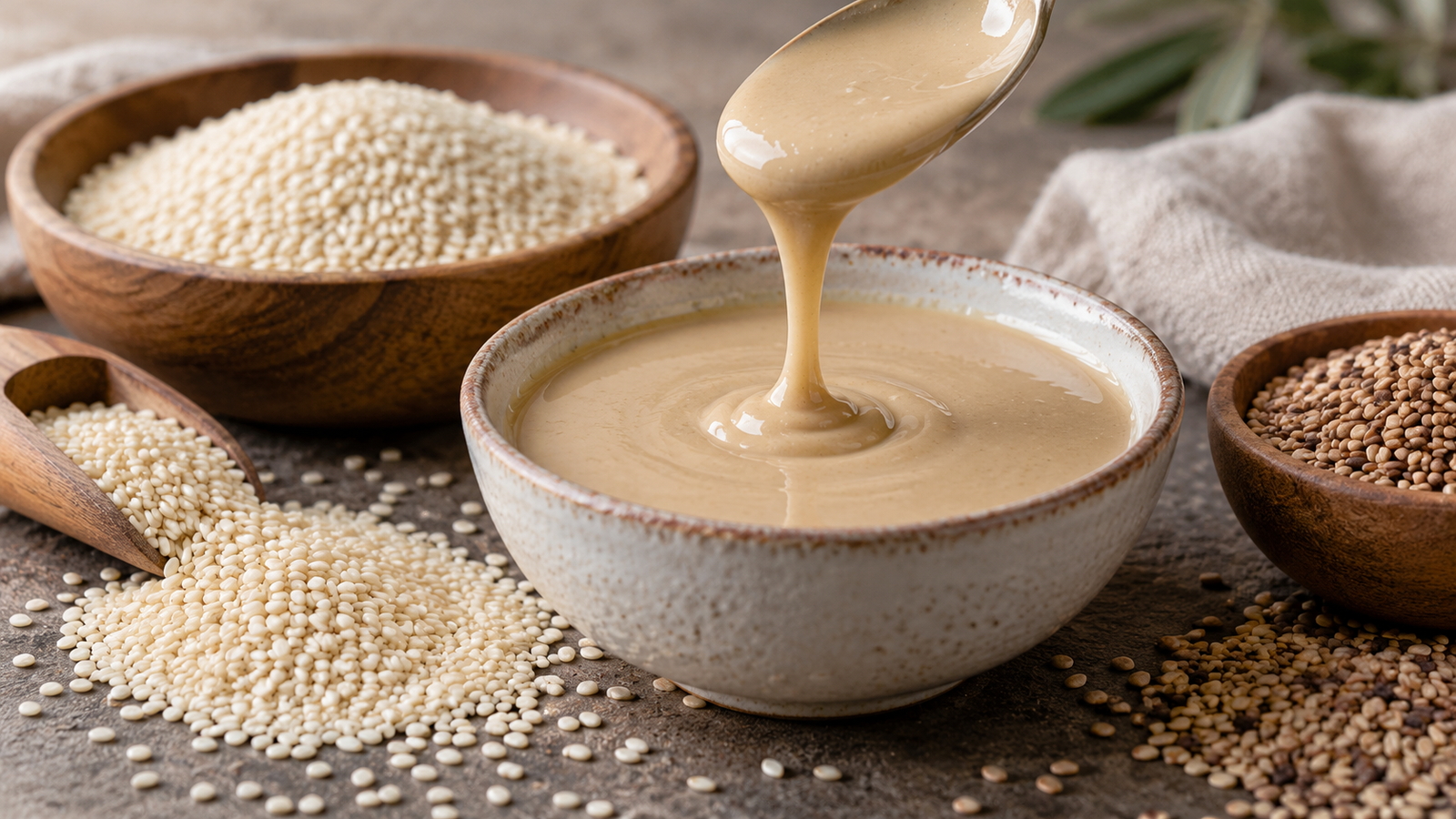
The best sesame seeds for tahini depend on the type of paste a manufacturer wants to produce. Hulled white sesame is commonly preferred for smooth, light-colored tahini, while unhulled seeds can produce a darker paste with a stronger flavor and thicker texture.
For manufacturers purchasing sesame in bulk, the choice goes beyond appearance. Seed purity, oil content, moisture, roasting performance, and food safety can affect the finished tahini and the cost of producing it.
A buyer ordering several tons of sesame needs to know which grade suits the production process and how to assess the product before placing an order. Understanding these requirements helps tahini manufacturers compare suppliers and purchase sesame that meets their product standards.
- Which Sesame Seeds Are Best for Tahini Production?
- Key Quality Requirements for Tahini Sesame Seeds
- How Roasting Affects the Quality of Tahini
- Food Safety Requirements for Sesame Used in Tahini
- How to Compare the Best Sesame Seeds for Tahini in Bulk
- Understanding the Real Cost of Tahini Sesame Seeds
- What Documents Should Tahini Manufacturers Request?
- Common Mistakes When Selecting Sesame Seeds for Tahini
- Source Sesame Seeds for Tahini Production With FieldFusion Corp
- Frequently Asked Questions About the Best Sesame Seeds for Tahini
- What are the best sesame seeds for tahini production?
- Are hulled sesame seeds better for tahini?
- Can unhulled sesame seeds be used for tahini?
- What purity level is suitable for tahini sesame seeds?
- Does 99.99% sesame purity guarantee good tahini?
- Is raw or roasted sesame better for tahini manufacturing?
- What food safety tests matter for sesame used in tahini?
- How can manufacturers check sesame quality before bulk purchasing?
- Does FieldFusion Corp supply hulled sesame seeds for tahini production?
Which Sesame Seeds Are Best for Tahini Production?
Hulled sesame seeds are a common choice for commercial tahini because removing the outer covering helps produce a lighter, smoother paste. They are often used in tahini sold for hummus, sauces, dips, and other food products where a mild flavor and consistent appearance are important.
Unhulled sesame seeds retain their natural outer covering and offer different processing characteristics. They may be preferred for traditional or specialty tahini products where manufacturers want a stronger sesame taste and a different texture.
The choice depends on the manufacturer’s recipe, equipment, and customer preferences. Both types can be used successfully when the raw material and processing conditions meet the intended product requirements.
Hulled Sesame Seeds for Smooth Tahini
Hulled sesame seeds have had their outer seed covering removed. This helps reduce the amount of hull material entering the grinding process and can produce a smoother paste with a lighter appearance.
For manufacturers producing light-colored tahini, hulled white sesame is usually a suitable starting point. However, the finished texture also depends on roasting conditions, grinding equipment, and how finely the seeds are processed.
Hulling quality should be assessed separately from seed purity. Even clean sesame seeds may contain unwanted hull material if the hulling process has not achieved the manufacturer’s required standard.
Unhulled Sesame Seeds for Traditional Tahini
Unhulled sesame seeds retain the outer covering and may produce tahini with a darker appearance, stronger flavor, and thicker consistency. They are used in some traditional products where these characteristics are part of the expected taste and texture.
A 2008 study in the Journal of Food Process Engineering examined sesame pastes made with hulled and unhulled roasted seeds. Under the tested conditions, increasing the share of unhulled sesame increased the thickness of the paste.
This finding is useful for manufacturers developing different tahini products. However, the result depends on the recipe and processing conditions, so manufacturers should confirm performance through their own production trials.
Comparing Sesame Types for Tahini Manufacturing
| Sesame type | Main characteristics | Suitable manufacturing needs |
| Hulled white sesame | Lighter appearance, reduced hull material, generally milder flavor | Smooth and light-colored tahini |
| Natural unhulled sesame | Retains the outer covering and has a different flavor and texture | Traditional or specialty tahini |
| Natural color-sorted sesame | Improved color uniformity while retaining the hull | Manufacturers with their own hulling or processing facilities |
| Hulled roasted sesame | Hulled seeds that have already been roasted | Manufacturers using approved roasted ingredients |
The table helps identify which sesame type may suit a particular production process. It does not mean that every product within a category will have the same purity, moisture, oil content, or finished-paste performance.
Key Quality Requirements for Tahini Sesame Seeds
Tahini manufacturing requires raw materials that can produce the intended flavor, color, and texture under controlled processing conditions. A specification sheet should therefore describe more than the appearance of the seeds.
International buyers should identify the characteristics that affect their manufacturing process and agree on suitable quality limits with the supplier. The most important factors include hulling quality, purity, oil content, moisture, and seed condition.
1. Hulling Quality and Remaining Hull Material
For manufacturers purchasing hulled sesame, the amount of remaining hull material is an important quality consideration. Hull fragments can affect the appearance and texture of the finished tahini.
Buyers should examine whether the seeds have been properly hulled and whether the product meets their acceptable limits for remaining hull material. The exact requirement depends on the type of tahini being produced.
A representative sample can help manufacturers assess hulling quality before approving a large order. This becomes particularly useful when a product needs to maintain the same texture and color across repeated production batches.
2. Sesame Seed Purity
Purity measures the proportion of sesame material remaining after the impurities defined by an agreed test method are accounted for. Stones, soil, plant fragments, and seeds from other plants may be included in the impurity assessment.
High-purity sesame can reduce the amount of unwanted material entering the manufacturing process. However, purity is different from hulling quality and does not confirm that the seeds meet food safety requirements.
ISO 658:2002 provides a recognized method for determining impurities in oilseeds. Manufacturers can use agreed testing methods and product specifications to compare different supplier offers.
For a more detailed explanation of purity percentages and their impact on bulk buying, buyers should review the impurities allowed under the proposed specification rather than relying only on descriptions such as premium or export quality.
3. Oil Content and Paste Consistency
Sesame seeds contain natural oil, which contributes to the texture and flow of tahini. The amount of oil in the raw material can influence how the paste behaves during grinding and storage.
A manufacturer seeking a particular consistency may include oil content in its purchasing specification. However, the finished texture also depends on roasting, particle size, processing temperature, and the grinding method.
ISO 659:2009 describes a reference method for determining oil content in oilseeds. Buyers can request relevant test results when oil content is an important requirement for their product.
The highest oil content does not automatically produce the best tahini. Manufacturers need to assess how the selected sesame performs under their own production conditions.
4. Moisture Content
Moisture affects sesame storage and roasting performance. Seeds with unsuitable moisture conditions may develop quality problems during storage or behave differently during heating.
A 2024 study in the Journal of Food Science examined how different moisture levels in dehulled sesame affected the finished paste. The researchers found changes in aroma, color, and the formation of certain unwanted compounds under the tested processing conditions.
The study shows why moisture deserves attention during tahini production. Its experimental moisture levels should not be used as general storage limits or as a recommended specification for commercial sesame shipments.
For bulk purchasing, ISO 665:2020 provides a method for measuring moisture and volatile matter in oilseeds. The acceptable moisture limit should be agreed according to the product, storage conditions, and manufacturing requirements.
5. Color, Aroma, and Seed Condition
Seed appearance is important when the finished tahini must have a consistent color. Manufacturers producing light-colored tahini may prefer hulled sesame with a uniform white or cream appearance.
Aroma and seed condition are equally important because poor storage or damaged material can affect the final taste. Seeds with unusual odors, visible mold, insect damage, or other signs of deterioration should be assessed before entering production.
The purchasing specification should describe acceptable appearance and condition. A manufacturer can then use a sample and small production trial to determine whether the material meets its expectations.
How Roasting Affects the Quality of Tahini
Roasting develops much of the flavor associated with commercial tahini. The selected roasting conditions can influence the paste’s aroma, color, and overall taste.
The same sesame type may produce different results when roasted under different conditions. Manufacturers should therefore assess how the raw material performs within their own process rather than choosing a grade based only on its appearance.
Light-Roasted vs Strongly Roasted Sesame
Light roasting can produce a milder sesame flavor and a lighter-colored paste. Stronger roasting may develop a more noticeable toasted or nutty flavor, along with a darker appearance.
Excessive heating can create unwanted burnt or bitter notes. The best roasting profile depends on the seed type, equipment, moisture condition, and intended finished product.
The 2024 Journal of Food Science study on sesame moisture also found that processing conditions influenced aroma-related compounds and color. This supports the importance of controlling raw material condition and roasting when developing a consistent tahini product.
Should Manufacturers Buy Raw or Roasted Sesame?
Manufacturers with their own roasting facilities may prefer raw hulled sesame because they can control the roasting process and develop a specific flavor profile. This may be useful for brands with an established tahini recipe.
Other manufacturers may consider pre-roasted sesame when it suits their production arrangement. In that case, the supplier’s roasting process, product characteristics, and food safety controls require careful assessment.
Pre-roasted sesame should not automatically be treated as safe for ready-to-eat production. Buyers need to confirm that the relevant food safety hazards have been controlled and that the product is suitable for its intended use.
Food Safety Requirements for Sesame Used in Tahini
Tahini is commonly consumed without further cooking, making food safety an important part of raw material selection. A high purity percentage and clean appearance do not confirm that a sesame shipment is free from harmful microorganisms or chemical hazards.
Manufacturers should review the risks relevant to their products and the markets they supply. The required controls and tests should be established through the company’s food safety plan.
Salmonella and Low-Moisture Food Safety
Salmonella is a significant concern in sesame and tahini manufacturing. Although sesame is a low-moisture ingredient, harmful microorganisms can survive for long periods when conditions do not support their growth.
The FAO and WHO Codex Alimentarius Code of Hygienic Practice for Low-Moisture Foods, CXC 75-2015, provides guidance on controlling hazards in low-moisture foods, including sesame seeds and sesame paste.
Manufacturers should use appropriate hygiene controls and validated processing steps where these are needed to reduce harmful microorganisms. Controls after roasting or another treatment are also important because contamination can occur before packaging.
Pesticide Residues and Chemical Safety
Sesame imported for food manufacturing must meet the chemical safety requirements of the destination market. These may include limits for pesticide residues and other regulated substances.
The CBI’s sesame market guidance identifies microbiological contamination and chemical residues as important concerns in supplying the European market.
Importers should confirm the applicable rules and request relevant quality documentation for the intended product. Test reports should identify the tested material and be assessed against the requirements of the destination market.
Sesame Allergen Requirements
Sesame is a recognized food allergen in several major markets. In the United States, sesame became the ninth major food allergen under federal law on January 1, 2023.
The US Food and Drug Administration explains how sesame must be declared on applicable packaged food labels.
Tahini manufacturers should maintain accurate ingredient and allergen records and follow the applicable labeling rules. These requirements should be considered alongside food safety and product quality when approving sesame for manufacturing.
How to Compare the Best Sesame Seeds for Tahini in Bulk
Two suppliers may offer hulled white sesame at different prices, but the cheaper product may not produce the lowest manufacturing cost. Differences in hulling quality, purity, moisture, and roasting performance can affect the work required before finished tahini is ready for sale.
The most useful comparison is based on the same product requirements. Manufacturers should also test the sesame under similar processing conditions to understand whether the difference in price provides real commercial value.
Example: Comparing Two Hulled Sesame Grades
Consider a tahini manufacturer purchasing 10 metric tons of hulled white sesame. Two suppliers offer different purity specifications, while the remaining product characteristics still need to be confirmed.
| Buying factor | Supplier A | Supplier B |
| Sesame type | Hulled white sesame | Hulled white sesame |
| Order quantity | 10,000 kg | 10,000 kg |
| Minimum purity | 99.5% | 99.95% |
| Maximum permitted impurities | 50 kg | 5 kg |
| Remaining hull material | To be confirmed | To be confirmed |
| Moisture content | To be confirmed | To be confirmed |
| Oil content | To be confirmed | To be confirmed |
| Production trial | Required | Required |
The 99.5% specification permits up to 50 kg of defined impurities, while the 99.95% specification permits up to 5 kg. The difference between the two limits is 45 kg across the same shipment quantity.
These are calculated limits, not actual laboratory results or confirmed processing losses. The buyer still needs to determine how each sesame grade performs during roasting and grinding.
This is a hypothetical comparison and does not represent actual quotations or product specifications from FieldFusion Corp or any other supplier.
What Should a Tahini Production Trial Measure?
A production trial helps manufacturers determine whether sesame meets their finished-product requirements. The sample should be representative of the material offered for the commercial order.
The trial can examine the following characteristics:
| Production factor | What manufacturers should assess |
| Roasting performance | Flavor development and color consistency |
| Grinding | Ease of processing and finished particle size |
| Paste texture | Smoothness, thickness, and flow |
| Taste and aroma | Match with the approved tahini profile |
| Oil separation | Behavior during the planned storage period |
| Accepted output | Quantity of tahini that meets the product specification |
The results should be compared under controlled production conditions. If suppliers’ samples are processed differently, it becomes harder to determine whether the differences come from the seeds or the manufacturing process.
Manufacturers can use the results to decide which sesame grade meets their needs. This is particularly useful when they intend to purchase the same ingredient regularly.
Understanding the Real Cost of Tahini Sesame Seeds
The purchase price of sesame is only one part of the cost of manufacturing tahini. Cleaning, hulling, roasting, grinding, energy use, and rejected material can all affect the amount spent before the finished product is ready.
For example, natural sesame may cost less than hulled sesame at the time of purchase. However, a factory without its own hulling equipment would need to consider the additional work involved before production.
A useful comparison is the cost of producing one kilogram of accepted tahini rather than the price of one kilogram of raw sesame.
Calculating Cost Per Kilogram of Finished Tahini
A manufacturer can compare different sesame suppliers using the total cost of an approved production batch.
Cost per kilogram of accepted tahini = Total relevant production cost ÷ Kilograms of finished tahini that meet the approved specification
For example, suppose a hypothetical test batch has total relevant costs of US$1,800 and produces 850 kg of accepted tahini. The cost would be approximately US$2.12 per kilogram.
If another sesame grade produces a different amount of accepted tahini or requires more processing, the cost may change. This comparison helps purchasing teams evaluate the product’s actual manufacturing value.
The figures are illustrative and do not represent FieldFusion pricing, production yields, or guaranteed performance.
What Documents Should Tahini Manufacturers Request?
A supplier’s product specification should describe the sesame type and the quality requirements agreed for the purchase. Supporting records help buyers assess whether the proposed material meets those requirements.
The main documents include a product specification sheet, relevant Certificate of Analysis, sample or lot identification, and any food safety information required for the intended market. Their exact scope depends on the product and purchasing agreement.
For manufacturers needing more guidance on supplier approval, documentation, repeat orders, and commercial terms, FieldFusion’s bulk sesame seed buying guide for manufacturers covers these purchasing considerations in detail.
Tahini-specific approvals should also include the results of a representative production trial. The manufacturer can then connect the approved seed grade with its expected flavor, texture, and processing performance.
Common Mistakes When Selecting Sesame Seeds for Tahini
Choosing Sesame Only by Its Color
White sesame can be suitable for light-colored tahini, but appearance does not establish flavor, oil content, hulling quality, or food safety. Two lots with similar color may produce different results after roasting and grinding.
A representative production trial provides more useful information than visual inspection alone. It allows the manufacturer to evaluate the finished paste under its own processing conditions.
Ignoring Hulling Quality
Manufacturers may order hulled sesame without clearly defining how much remaining hull material is acceptable. This can create problems when the finished tahini requires a smooth texture and consistent appearance.
The purchase specification should address the hulling requirement separately from general purity. Sample inspection and production testing can then confirm whether the sesame meets the intended product standard.
Assuming Higher Purity Guarantees Better Tahini
A high purity percentage can reduce the amount of defined foreign matter, but it cannot predict the finished tahini’s flavor, texture, or food safety. Other product characteristics remain important.
Manufacturers should compare purity with moisture, oil content, hulling quality, and production results. The final purchasing decision should reflect the complete ingredient specification.
Approving a Grade Without Testing Its Roasting Performance
A sesame grade may meet the supplier’s technical specification but produce an unexpected flavor or color during roasting. This can affect product consistency, especially when the manufacturer uses a fixed recipe.
Testing the sesame under normal manufacturing conditions helps identify these differences before a large purchase. The manufacturer can then approve a suitable product rather than relying only on a laboratory report.
Source Sesame Seeds for Tahini Production With FieldFusion Corp
International tahini manufacturers need sesame that matches their processing requirements and produces the quality their customers expect. FieldFusion Corp, part of Iqbal Group of Companies, supplies Pakistani agricultural products to international markets, including sesame seeds for food manufacturing.
FieldFusion’s sesame seed range includes natural machine-cleaned, natural color-sorted, hulled, and hulled roasted sesame seeds. These options serve different manufacturing needs, whether a buyer processes natural sesame in-house or requires hulled material for tahini production.
For manufacturers seeking smooth, light-colored tahini, FieldFusion’s hulled sesame category is particularly relevant. Buyers can discuss the required seed grade, hulling quality, moisture, purity, and packaging with the commercial team.
Documented Sesame Seed Purity and Quality Testing
FieldFusion has independent laboratory reports documenting 99.99% purity in specific sesame seed samples. These findings provide measurable evidence of the quality achieved in the tested material and support the company’s focus on quality-led agricultural sourcing.
For tahini manufacturers, this evidence can help establish confidence when reviewing FieldFusion as a potential sourcing partner. Manufacturers should confirm the specifications and available supporting documents for their intended purchase.
FieldFusion’s supply and compliance practices address agricultural sourcing, quality requirements, and export coordination. Buyers can discuss product details and available documentation before moving forward with commercial orders.
Request Tahini-Grade Sesame Seeds and a Bulk Quotation
FieldFusion works with international importers, food manufacturers, wholesale distributors, and businesses sourcing agricultural commodities from Pakistan. Tahini manufacturers can share their preferred sesame type, hulling requirements, purity, moisture, oil-content needs, order quantity, packaging, and destination market.
The commercial team can review the inquiry and discuss available sesame grades, product samples, relevant quality documentation, and commercial terms. All specifications and supply arrangements should be confirmed for the proposed order.
Looking for sesame seeds for tahini production? Contact FieldFusion Corp or email info@fieldfusioncorp.com to discuss your bulk sourcing requirements.
Frequently Asked Questions About the Best Sesame Seeds for Tahini
What are the best sesame seeds for tahini production?
Hulled white sesame seeds are a common choice for smooth, light-colored tahini with a relatively mild flavor. Unhulled sesame can also be used for traditional products where a darker color and different texture are preferred.
Are hulled sesame seeds better for tahini?
Hulled sesame is often preferred for smooth tahini because the outer covering has been removed. However, the best choice depends on the desired flavor, texture, and manufacturing process.
Can unhulled sesame seeds be used for tahini?
Yes. Unhulled sesame seeds can be used to make tahini with a different flavor, color, and consistency. Research on sesame paste has found that increasing unhulled sesame content can produce a thicker paste under certain processing conditions.
What purity level is suitable for tahini sesame seeds?
There is no single purity percentage suitable for every tahini manufacturer. Buyers should define the minimum acceptable purity based on their manufacturing needs and verify the result through an agreed testing method.
Does 99.99% sesame purity guarantee good tahini?
A 99.99% purity result indicates a low amount of defined impurities in the tested sample. Tahini quality also depends on hulling, moisture, oil content, roasting, grinding, and food safety.
Is raw or roasted sesame better for tahini manufacturing?
Raw hulled sesame may suit manufacturers that control roasting within their own facilities. Roasted hulled sesame may suit other production arrangements when its quality, flavor, and food safety controls meet the manufacturer’s requirements.
What food safety tests matter for sesame used in tahini?
Important concerns include Salmonella, applicable pesticide residues, and other regulated contaminants. Manufacturers should determine the required controls and testing according to the product, production process, and destination market.
How can manufacturers check sesame quality before bulk purchasing?
Manufacturers can review product specifications, request representative samples, examine relevant laboratory reports, and run production trials. The trial should assess flavor, texture, roasting performance, and the amount of finished tahini that meets the approved standard.
Does FieldFusion Corp supply hulled sesame seeds for tahini production?
Yes. FieldFusion Corp offers hulled and hulled roasted sesame seeds for food manufacturing applications, including tahini production. International buyers can contact the company to discuss available grades, specifications, samples, and bulk order requirements.
Comments are closed