
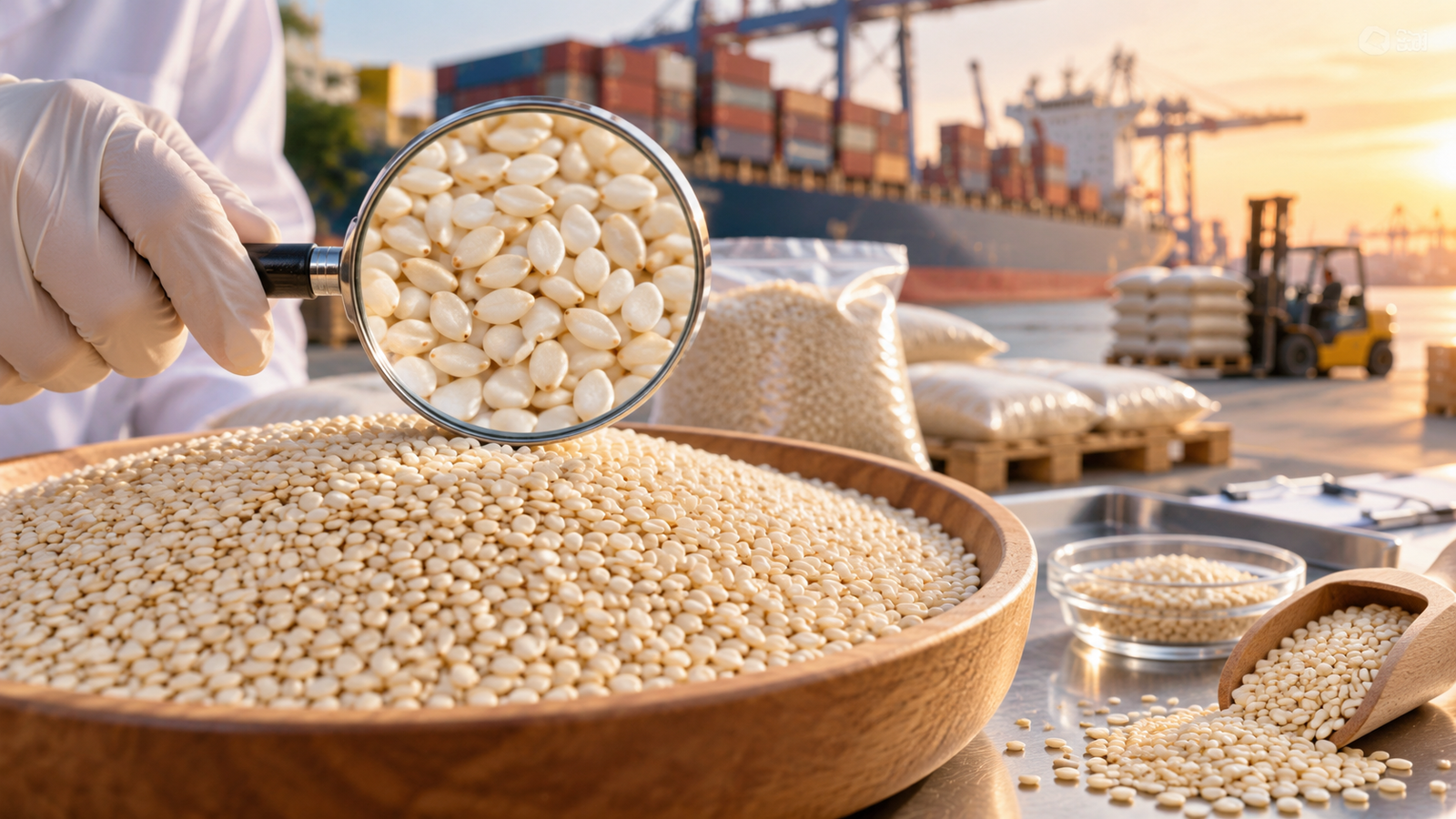
Sesame seed purity can affect the quality of a finished food product and the cost of preparing sesame seeds for manufacturing. A buyer ordering 20 metric tons of sesame at 99.5% purity may receive a product with a much higher permitted level of foreign matter than one ordered at 99.99% purity.
The difference matters to bakeries, tahini manufacturers, food processors, and wholesale distributors who need sesame seeds that meet their purchasing requirements. Stones, dirt, plant material, and other unwanted matter can create extra cleaning work and may affect the acceptance of a shipment.
International buyers should understand what purity percentages mean, how they are measured, and which documents can support a supplier’s claims. Clear specifications make it easier to compare quotations and choose sesame seeds that suit the intended market.
- What Does Sesame Seed Purity Mean?
- Why Sesame Seed Purity Matters to Bulk Buyers
- How Sesame Seed Purity Is Measured
- Sesame Seed Quality Standards Beyond Purity
- Sesame Seed Purity and Food Safety: What Is the Difference?
- How Processing Affects Sesame Seed Purity
- Sesame Seed Purity Checklist Before Placing a Bulk Order
- Common Mistakes When Comparing Sesame Seed Suppliers
- FieldFusion Corp: Sesame Seed Quality Supported by Independent Testing
- Frequently Asked Questions About Sesame Seed Purity
- What is sesame seed purity?
- What does 99.99% sesame seed purity mean?
- How is sesame seed purity tested?
- Is 99.95% purity suitable for food manufacturing?
- Does 99.99% purity mean sesame is free from harmful substances?
- What is the difference between sesame purity and moisture?
- Can buyers request independent sesame seed testing reports?
- Does FieldFusion Corp offer independently tested sesame seeds?
What Does Sesame Seed Purity Mean?
Sesame seed purity refers to the percentage of the sample that remains after the impurities defined by an agreed testing method are accounted for. It is commonly used in bulk trade to describe the cleanliness of sesame seeds.
Foreign matter can include small stones, soil, pieces of stems, leaves, and seeds from other plants. The exact classification depends on the testing method, which is why buyers should confirm how the purity percentage has been determined.
The International Organization for Standardization’s ISO 658:2002 provides a recognized method for measuring impurities in oilseeds. It also defines categories of impurities, helping buyers and laboratories use a consistent approach when evaluating a sample.
A high purity percentage generally means less material classified as impurities. However, it does not automatically confirm that the sesame has the right color, moisture level, flavor, or food safety results for the buyer’s intended use.
Understanding 99.5%, 99.9%, 99.95%, and 99.99% Purity
Purity percentages can look almost identical when written in a quotation. Their differences become easier to understand when converted into the amount of foreign matter permitted in a given quantity.
| Sesame purity | Maximum impurity percentage | Permitted impurities in 1,000 kg |
| 99.5% | 0.5% | 5 kg |
| 99.9% | 0.1% | 1 kg |
| 99.95% | 0.05% | 0.5 kg |
| 99.99% | 0.01% | 0.1 kg |
These are mathematical examples based on purity by weight. They are not universal sesame quality grades or confirmed specifications for every supplier.
For example, a 99.95% purity specification allows up to 0.5 kg of defined impurities in a 1,000 kg quantity, while a 99.99% specification allows up to 0.1 kg. Both may be suitable for particular applications, but the buyer must decide which meets the required product standard.
The stated percentage should be supported by an agreed testing method and relevant inspection results. A supplier’s description of sesame as premium or export quality does not replace that evidence.
Why Sesame Seed Purity Matters to Bulk Buyers
International sesame shipments are often purchased for use in food manufacturing, where raw material quality can affect production costs. The purity requirement should reflect what the manufacturer needs to produce and how much further cleaning the sesame may require.
A bakery using sesame as a topping may pay close attention to unwanted material and the appearance of the seeds. A tahini manufacturer may need a clean product but will also assess how it behaves during roasting and grinding.
Importers supplying several customers may handle different grades of sesame. One customer may have strict product specifications, while another may have the equipment needed for additional cleaning.
Example: Comparing Purity in a 20-Ton Shipment
Consider an importer purchasing 20 metric tons of natural sesame seeds. The following table shows the maximum amount of impurities permitted at different purity levels, assuming the same testing method is used.
| Purity level | Order quantity | Maximum permitted impurities |
| 99.5% | 20,000 kg | 100 kg |
| 99.9% | 20,000 kg | 20 kg |
| 99.95% | 20,000 kg | 10 kg |
| 99.99% | 20,000 kg | 2 kg |
At 99.5% purity, the specification permits up to 100 kg of defined impurities. At 99.99%, the permitted amount falls to 2 kg across the same shipment, a difference of 98 kg.
These figures show the limits stated in the specifications, not the actual amount of impurities in a shipment. The delivered product may contain less foreign matter, and its condition must be established through the agreed sampling and inspection process.
For buyers managing regular production, these differences can influence cleaning costs and product acceptance. The commercial value of a particular grade still depends on its price, processing needs, and suitability for the finished product.
How Sesame Seed Purity Is Measured
A reliable purity result begins with a sample that represents the product being tested. The sample is examined using an agreed method, and the findings are recorded so the buyer can assess them.
Collecting a Representative Sample
Sesame seeds are commonly shipped in large bags or other bulk packaging. A sample taken from one bag may not reflect the condition of the full lot, especially if material varies between bags.
ISO 21294:2017 describes manual and automatic sampling procedures used to assess the quality and condition of oilseeds. Buyers should confirm who will collect the sample, how the sample will be taken, and which lot it represents.
Separating and Measuring Impurities
The laboratory examines the sample and separates impurities according to the selected test method. The material identified as impurities is then weighed to determine its share of the total sample.
ISO 658:2002 provides a method for determining impurity content in oilseeds. It is important for the laboratory and buyer to use the same definitions because different product defects are not necessarily included in the purity calculation.
Calculating the Purity Percentage
In a simplified calculation, purity is determined by subtracting the weight of defined impurities from the total sample weight, dividing by the total sample weight, and multiplying by 100.
Purity (%) = [(Sample weight − Impurity weight) ÷ Sample weight] × 100
Suppose a 1,000-gram sesame sample contains 0.1 grams of defined impurities. The remaining weight is 999.9 grams, giving a calculated purity of 99.99%.
The final laboratory result must follow the agreed testing standard, including its sampling and measurement requirements. This simple example explains the percentage but does not replace a laboratory procedure.
Why Independent Laboratory Testing Matters
Independent testing gives buyers another source of evidence when reviewing a supplier’s quality claims. A report can document the test method, sample identification, date, and measured result.
However, the report must be connected to the product being purchased. A laboratory result for one lot does not automatically establish the purity of a different lot or a future shipment.
Buyers should also check whether the laboratory collected the sample or received it from another party. That distinction helps them understand how the tested material relates to the proposed order.
Sesame Seed Quality Standards Beyond Purity
Purity is only one part of a sesame specification. Two shipments may have the same purity percentage but differ in moisture, seed appearance, oil content, or the number of damaged seeds.
The Centre for the Promotion of Imports from developing countries (CBI) identifies purity, seed color, oil content, and seed quality as important grading factors for the European sesame market. Its guidance also notes that commercial grades depend on the buyer’s requirements.
Moisture Content
Moisture affects how sesame seeds behave during storage and transport. Excess moisture can increase the risk of mold and product damage, especially when shipments remain in storage for long periods.
ISO 665:2020 provides a method for measuring moisture and volatile matter in oilseeds. Importers should agree on the acceptable moisture level and request supporting results where required.
A shipment may have high purity but still fail the buyer’s moisture specification. Both factors need to be checked separately.
Seed Color and Appearance
The appearance of sesame is important when the seeds remain visible in food products. Bakeries and confectionery manufacturers may prefer a particular color and level of uniformity for their finished goods.
Natural sesame seeds can show color differences, while optical sorting can remove some unwanted or discolored seeds. Buyers should define the acceptable color range instead of assuming that a high purity figure guarantees a uniform appearance.
Broken and Damaged Seeds
Broken, immature, or damaged sesame seeds may affect the appearance and performance of a product. These defects can be especially important for manufacturers with strict raw material requirements.
Such defects should be assessed under the relevant product specification. They should not automatically be treated as foreign matter unless the agreed testing method classifies them that way.
Oil Content and Manufacturing Use
Sesame used for oil extraction is often assessed for its oil content, while tahini manufacturers may also examine flavor, texture, and grinding performance. The most suitable grade therefore depends on how the seeds will be processed.
A buyer should not select sesame based only on the highest available purity. The complete product specification needs to match the manufacturing process and customer requirements.
Sesame Seed Purity and Food Safety: What Is the Difference?
Sesame with 99.99% measured purity may contain very little defined foreign matter, but this result does not confirm that the product meets every food safety requirement. Physical impurities and food safety hazards are assessed through different checks.
Pesticide Residues and Chemical Contaminants
Sesame seeds intended for international food markets must meet applicable limits for pesticide residues and other regulated substances. These requirements can differ between countries and may change over time.
For buyers supplying the European Union, the European Commission’s Pesticides Database provides information on pesticide maximum residue limits, or MRLs. Buyers should check the applicable legal rules and agree with the supplier on any testing needed for the intended shipment.
Salmonella and Microbiological Safety
Sesame is a low-moisture food ingredient, but harmful microorganisms can still be a concern. Low moisture can limit microbial growth without necessarily eliminating microorganisms already present in the product.
The FAO and WHO Codex Alimentarius Code of Hygienic Practice for Low-Moisture Foods, CXC 75-2015, explains controls for microbiological risks, including Salmonella.
Importers should review relevant handling practices and food safety documents. When required by the buyer’s risk assessment or importing market, appropriate microbiological testing should form part of the product approval process.
Sesame Allergen Requirements
Sesame is an important food allergen, and manufacturers must follow the labeling rules of their destination markets. In the United States, sesame became the ninth major food allergen under federal law, with the related requirements taking effect on January 1, 2023.
The US Food and Drug Administration provides information about sesame allergen labeling. International buyers should confirm the relevant requirements when preparing sesame ingredients or finished food products for sale.
These checks serve different purposes. A purity test can measure defined impurities, but it cannot replace chemical, microbiological, or allergen-related controls.
How Processing Affects Sesame Seed Purity
Sesame seeds may go through different cleaning and processing stages before export. The selected method can affect the appearance and condition of the finished product, although the actual purity still needs to be measured.
Machine-Cleaned Sesame Seeds
Machine cleaning uses equipment to remove unwanted material from harvested sesame. Depending on the processing setup, this may include screening, air separation, and other cleaning steps.
This product type can be suitable for buyers who want natural sesame for further processing. The buyer should still confirm the agreed purity percentage and the condition of the final product.
Color-Sorted Sesame Seeds
Optical color sorting uses equipment to identify and remove seeds or materials with unwanted visual characteristics. It can improve color uniformity and help separate discolored material.
Color sorting may support quality improvement, but it does not automatically prove a specific purity percentage. The finished product should be assessed against the agreed specification.
Hulled Sesame Seeds
Hulled sesame seeds have had their outer covering removed. They are commonly used in tahini, bakery products, and confectionery where a lighter appearance or different texture is needed.
Hulling quality and purity should be evaluated separately. A buyer may need to assess remaining hull material, seed appearance, and other product characteristics alongside the amount of foreign matter.
Sesame Seed Purity Checklist Before Placing a Bulk Order
Importers should compare offers using the same product requirements. A lower price can be attractive, but it may not offer better value if the product needs additional cleaning or does not meet the manufacturer’s specifications.
The following details should be agreed before confirming a commercial order.
| Buying requirement | What to confirm |
| Product type | Natural, machine-cleaned, color-sorted, hulled, or roasted sesame |
| Purity | Required minimum percentage and agreed testing method |
| Moisture | Maximum acceptable moisture level |
| Appearance | Seed color, uniformity, and allowable defects |
| Food safety | Applicable tests and destination-market requirements |
| Sample | How it was collected and which lot it represents |
| Documentation | Product specification, available laboratory results, and inspection records |
| Commercial terms | Quantity, packaging, delivery terms, and shipment arrangements |
A complete inquiry helps the supplier prepare a quotation for the required product rather than a general sesame grade. It also gives both parties a clear basis for inspection and acceptance.
Documents to Request From a Sesame Supplier
A product specification sheet should explain the agreed limits for purity, moisture, seed condition, and other important quality factors. When relevant, buyers can also request a Certificate of Analysis and an independent inspection report.
The Certificate of Analysis should identify the tested material and its results. Buyers should review the sample details and report date to understand whether the document supports the product being offered.
For more information about evaluating suppliers, approving ingredients, and managing repeat orders, FieldFusion’s bulk sesame seeds supplier guide for manufacturers covers the wider purchasing process.
Common Mistakes When Comparing Sesame Seed Suppliers
Accepting Purity Claims Without Supporting Evidence
A supplier may advertise high-purity sesame without explaining how the percentage was measured. Buyers who accept the claim without checking the method and documentation may find it difficult to assess the delivered product later.
The quotation should state the agreed quality requirements. Where testing is necessary, the buyer should confirm how the results will be established and reviewed.
Using Reports From Unrelated Shipments
An earlier laboratory report can provide evidence of a supplier’s past product quality. However, it does not confirm that a new shipment has the same characteristics.
A buyer should check the relationship between the report, the sampled material, and the lot being purchased. This makes the documentation more useful during product approval.
Comparing Prices Without Comparing Specifications
Consider two suppliers offering natural white sesame seeds at different prices. One quotes 99.5% purity, while the other offers 99.95%, but their moisture limits and processing conditions are also different.
The quotations cannot be compared properly until the buyer considers the complete specification. Cleaning costs, manufacturing requirements, inspection arrangements, and delivery terms may all affect the final value.
Buyers can explore the top sesame seed exporters in Pakistan to identify potential suppliers for their sourcing requirements.
FieldFusion Corp: Sesame Seed Quality Supported by Independent Testing
International buyers need clear product specifications and reliable information when sourcing sesame seeds from Pakistan. FieldFusion Corp, part of Iqbal Group of Companies, supplies agricultural products to international markets, with sesame seeds forming an important part of its export portfolio.
FieldFusion’s products include natural machine-cleaned sesame, natural color-sorted sesame, hulled sesame, and hulled roasted sesame seeds. These categories serve different requirements in bakery manufacturing, tahini production, confectionery, and other food applications.
Documented 99.99% Sesame Seed Purity
Independent laboratory reports have documented 99.99% purity in FieldFusion sesame seed samples. These results provide measurable evidence of the quality achieved in the tested material and support the company’s focus on quality-based agricultural sourcing.
For importers, documented results are useful when evaluating a potential supplier and discussing product specifications. The findings apply to the samples tested, so the agreed grade and relevant testing documents should be confirmed for each proposed order.
FieldFusion’s supply and compliance practices describe its approach to product sourcing, quality requirements, and export coordination. The company works with international buyers to discuss available products and the requirements of their intended markets.
Request Sesame Seed Specifications and a Bulk Quotation
FieldFusion welcomes inquiries from international importers, food manufacturers, and wholesale distributors looking for sesame seeds from Pakistan. Buyers can share their preferred sesame type, purity percentage, moisture requirements, quantity, packaging, and destination market.
The commercial team can review the inquiry and discuss available grades, samples, quality documentation, and shipment arrangements. The applicable specifications and supporting reports should be confirmed for the particular order.
For bulk sesame seed sourcing inquiries, contact FieldFusion Corp through the official contact page or email info@fieldfusioncorp.com.
Frequently Asked Questions About Sesame Seed Purity
What is sesame seed purity?
Sesame seed purity is the percentage of a sample remaining after the impurities defined by the agreed testing method are accounted for. It is used in bulk trade to assess the amount of foreign matter in sesame seeds.
What does 99.99% sesame seed purity mean?
A 99.99% purity specification permits no more than 0.01% defined impurities by weight under the agreed method. In a hypothetical 1,000 kg quantity, that equals a maximum of 0.1 kg of impurities.
How is sesame seed purity tested?
A representative sample is collected and examined to identify and measure impurities according to the chosen method. ISO 658:2002 is a recognized standard for determining impurity content in oilseeds.
Is 99.95% purity suitable for food manufacturing?
Sesame with 99.95% purity may be suitable for certain food manufacturing applications if it meets the buyer’s complete product specification. Moisture, seed condition, food safety, and processing requirements must also be checked.
Does 99.99% purity mean sesame is free from harmful substances?
No. Purity measures defined impurities and does not confirm that sesame is free from pesticide residues, harmful microorganisms, or other food safety hazards. These require separate controls and testing where applicable.
What is the difference between sesame purity and moisture?
Purity refers to the amount of defined impurities in the sample, while moisture testing measures moisture and volatile matter. Both are important quality factors, but they assess different product characteristics.
Can buyers request independent sesame seed testing reports?
Buyers can ask suppliers for relevant quality documentation before placing an order. Available reports should be checked to confirm which sample or product lot was tested and whether the results meet the agreed requirements.
Does FieldFusion Corp offer independently tested sesame seeds?
Independent laboratory reports have documented 99.99% purity in specific FieldFusion sesame seed samples. Buyers can contact the company to discuss current product specifications and the quality documents available for their intended purchase.
Comments are closed