
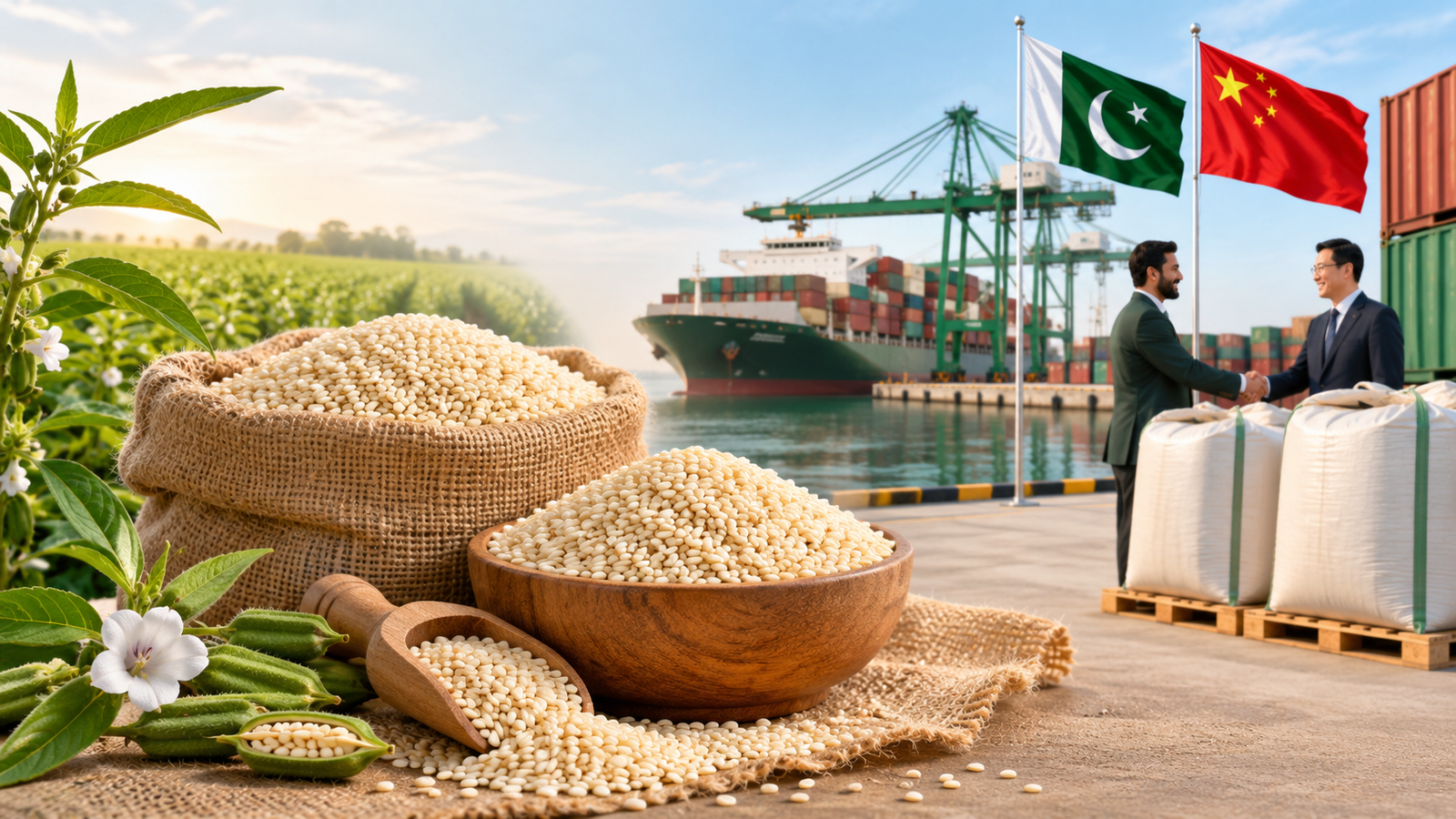
Sesame seed export from Pakistan to China requires buyers to look beyond the quoted price and check product quality, customs requirements, and shipping documents before placing bulk orders. Chinese importers need to know whether the sesame meets their processing requirements and whether the overseas supplier can provide the documents needed for import.
Pakistan is an established source of sesame seeds for Chinese oil processors, food manufacturers, and agricultural trading businesses. Recent trade figures show stronger shipments during the first seven months of 2026, although buyers still need to compare product grades, quality reports, and delivery terms before confirming an order.
- Pakistan's Sesame Seed Exports to China: Latest Trade Figures
- Why Chinese Buyers Source Sesame Seeds From Pakistan
- Sesame Seed Quality Requirements for Chinese Importers
- China's GACC Registration Requirements for Sesame Imports
- Phytosanitary Certification and Export Documents
- Food Safety and Independent Quality Testing
- Packaging, Shipping, and Import Costs
- How to Compare Pakistani Sesame Seed Suppliers
- Source Pakistani Sesame Seeds With FieldFusion Corp
- Frequently Asked Questions About Sesame Seed Exports From Pakistan to China
Pakistan’s Sesame Seed Exports to China: Latest Trade Figures
China is one of the world’s largest sesame import markets, purchasing seeds for edible oil production, food processing, and other commercial applications. Its demand creates opportunities for Pakistani exporters, although import volumes and prices can change from year to year.
According to the World Bank’s World Integrated Trade Solution (WITS), China imported approximately 1.46 million metric tons of sesame seeds worth US$1.95 billion in 2025. These figures cover sesame seeds under international trade code HS 120740.
Pakistan’s Sesame Trade Performance in 2024, 2025, and 2026
Pakistan’s sesame trade with China has experienced noticeable changes. Shipments declined in 2025 compared with 2024, but trade activity recovered during the first seven months of 2026.
| Reporting period | China’s sesame imports from Pakistan | Import value |
| January–December 2024 | 177,641 MT | US$226.53 million |
| January–December 2025 | 87,573 MT | US$101.66 million |
| January–July 2026 | 103,340 MT | US$105.29 million |
Sources: World Bank WITS, 2024, World Bank WITS, 2025, and Associated Press of Pakistan, September 9, 2026. Figures are rounded. The 2026 data covers seven months only.
According to Chinese customs data reported by the Associated Press of Pakistan, Pakistan’s sesame shipments to China increased by 110.8% in volume and 72.2% in value during January–July 2026, compared with the same period in 2025.
This recovery shows renewed Chinese demand for Pakistani sesame during the reported period. However, buyers should use current quotations and supplier information rather than historical trade values when making purchasing decisions.
Why Chinese Buyers Source Sesame Seeds From Pakistan
Pakistan supplies sesame seeds for different commercial applications, including edible oil extraction and food manufacturing. Chinese businesses can source natural and processed sesame grades according to their production requirements.
An oil processor may focus on oil content, moisture, and foreign matter, while a food manufacturer may prioritize seed color, cleanliness, and uniform appearance. These differences affect which sesame grade is suitable for each buyer.
Natural and Machine-Cleaned Sesame Seeds
Natural sesame retains its outer covering and may undergo mechanical cleaning before export. This process helps remove unwanted materials such as soil, stones, and plant fragments.
Machine-cleaned sesame can suit buyers with their own sorting, processing, or oil extraction facilities. Its suitability depends on the agreed purity, moisture, seed condition, and other product requirements.
Color-Sorted and Further-Processed Sesame
Color sorting uses optical equipment to separate seeds based on their visual characteristics. It can improve color uniformity and remove certain discolored or unwanted materials.
Hulled sesame has had its outer covering removed, making it suitable for products such as tahini, bakery ingredients, and confectionery. Hulled roasted sesame serves different manufacturing needs and must be assessed according to its processing characteristics and food safety controls.
Buyers should clearly identify the product type when requesting quotations because the processing method can affect price, quality specifications, and customs classification.
Sesame Seed Quality Requirements for Chinese Importers
Product quality is a key consideration when purchasing sesame in bulk. Two suppliers may offer the same sesame category, but their specifications can differ in purity, moisture, oil content, appearance, and defects.
China’s recommended national product standard, GB/T 11761-2021, Sesame Seed, provides a reference for sesame quality. The official Chinese standards database confirms that this standard remains current.
This recommended product standard is separate from mandatory food safety and customs requirements. Buyers should agree on the required grade and acceptance limits in their purchasing contracts.
Purity and Foreign Matter
Sesame seed purity describes the proportion of sesame material remaining after impurities are measured under an agreed testing method. Foreign matter can include stones, soil, plant fragments, and other unwanted materials.
For example, a 25-metric-ton shipment with a minimum purity specification of 99.5% permits up to 125 kg of defined impurities. Under a 99.95% purity specification, the permitted amount falls to 12.5 kg.
These figures represent calculated limits rather than actual laboratory results or confirmed processing losses. Buyers should compare samples and test reports using the same agreed method.
Moisture Content
Moisture content affects sesame quality during storage and transportation. Excess moisture can contribute to deterioration, particularly when seeds remain in bags or containers for extended periods.
The acceptable moisture limit should reflect the buyer’s processing needs, storage conditions, and applicable import requirements. A measured result provides a more reliable basis for acceptance than a general statement that the seeds are dry.
Oil Content and Seed Condition
Oil content is particularly important for businesses purchasing sesame for extraction. It can influence processing performance, although the final result also depends on the equipment and production method.
Food manufacturers may place greater emphasis on seed color, damaged seeds, odors, and visible defects. A representative sample helps importers assess these characteristics before placing a commercial order.
China’s GACC Registration Requirements for Sesame Imports
China’s General Administration of Customs, commonly known as GACC, manages import controls and relevant overseas enterprise registration requirements. Chinese importers must establish whether the proposed sesame product and overseas supplier meet the applicable rules.
Registration requirements changed in 2026, making it important to review the latest regulations rather than rely on older guidance.
What Changed Under GACC Decree No. 280?
GACC Decree No. 280 took effect on June 1, 2026, replacing Decree No. 248 for overseas food manufacturer registration. GACC Announcement No. 27 of 2026 provided further implementation guidance.
The revised system changed registration procedures for certain overseas food manufacturers. However, primary edible agricultural products, including relevant grains and oilseeds, follow separate registration arrangements.
China’s official embassy explanation of the revised regulations confirms the June 2026 implementation date. The Canadian Food Inspection Agency’s guidance also explains the separate treatment of primary agricultural products.
Registration Requirements for Raw Sesame Seeds
Covered primary agricultural products follow arrangements under GACC Announcement No. 219 of 2025, effective December 15, 2025.
Under this framework, Chinese importers must check whether the product appears in the applicable registration catalogue. Where registration is required, the overseas enterprise must have the appropriate registration status, and the importer must provide the relevant Chinese registration number in its customs declaration.
The Australian Department of Agriculture’s explanation of Announcement No. 219 confirms these requirements for covered agricultural products.
For Pakistani sesame shipments, buyers should verify the applicable registration route and enterprise details before confirming the order. Registration for one product should not be assumed to cover every sesame category.
Do Hulled and Roasted Sesame Follow the Same Rules?
Processing may affect a product’s customs classification and registration requirements. Raw, hulled, roasted, and prepared sesame products should be assessed according to their actual characteristics.
The Chinese importer and customs agent should confirm the correct customs code and applicable registration route. This is especially important when sesame is imported as a processed food ingredient rather than an unprocessed agricultural product.
Phytosanitary Certification and Export Documents
Plant-health requirements are an important part of agricultural exports from Pakistan. The documents and inspections needed for sesame shipments depend on China’s applicable import conditions.
Pakistan’s Department of Plant Protection (DPP) manages relevant quarantine inspections and phytosanitary certification procedures for plant products.
Phytosanitary Requirements
The Department of Plant Protection’s export procedures explain that exporters must meet the importing country’s plant-health requirements. These procedures can include inspection, sampling, treatment where necessary, and issuance of a phytosanitary certificate.
Exporters should establish whether the proposed sesame shipment requires additional declarations, specific treatments, or an import permit. These conditions should be confirmed before the goods are prepared for shipment.
The Pakistan Single Window DPP service supports electronic processing of phytosanitary certificate applications and related approvals.
Documents Chinese Buyers Should Review
Importers should agree on the necessary documents before shipment so that the commercial records match the product and customs declaration.
| Document | Main purpose |
| Commercial invoice | Identifies the buyer, seller, goods, and transaction value |
| Packing list | Records shipment quantity, packaging, and weight |
| Bill of lading or other transport document | Confirms cargo movement and shipping arrangements |
| Phytosanitary certificate | Supports applicable plant-health requirements |
| Certificate of origin | Establishes the product’s origin |
| Certificate of Analysis | Records agreed test results for the identified material |
| Overseas enterprise registration details | Supports customs declarations where registration is required |
The exact requirements depend on the product classification, shipment conditions, and applicable Chinese regulations. Importers should confirm their final document list with their customs agents before cargo dispatch.
Food Safety and Independent Quality Testing
A sesame shipment may meet its physical purity requirement while still needing separate food safety checks. Chemical residues and harmful microorganisms cannot be ruled out by appearance or cleanliness alone.
Chinese buyers should identify the relevant food safety requirements for the product and its intended use. Laboratory reports should address the hazards and quality characteristics specified in the purchase agreement.
China’s Updated Pesticide Residue Standard
China introduced GB 2763-2026, National Food Safety Standard for Maximum Residue Limits for Pesticides in Food, effective March 1, 2026. The new standard replaced GB 2763-2021 and GB 2763.1-2022.
The change was announced by China’s National Health Commission, the Ministry of Agriculture and Rural Affairs, and the State Administration for Market Regulation. Buyers can review the official February 2026 announcement.
Importers should confirm which pesticide residue limits apply to their sesame product under the current standard. Testing should be based on the relevant substances and product requirements rather than an assumed universal testing list.
Microbiological Safety and Product Contaminants
Sesame used in food manufacturing can present microbiological risks when handling or processing controls are unsuitable. This matters particularly when the seeds will enter products that receive no effective later treatment.
Buyers should also consider applicable limits for other food contaminants. The required tests and controls depend on the sesame product, its intended use, and China’s current food safety rules.
Reviewing Independent Laboratory Reports
Independent laboratory reports can provide useful evidence of a sesame sample’s quality. Buyers should examine the sample identification, testing method, date, results, and relationship to the proposed shipment.
The sampling process also matters because a report supplied for one sample does not establish the condition of every future shipment. Testing arrangements should therefore be agreed before final product acceptance.
Packaging, Shipping, and Import Costs
Packaging should protect sesame seeds from contamination, moisture exposure, and physical damage during transportation. The chosen materials and bag sizes should suit the buyer’s handling and storage arrangements.
Bulk sesame may be transported in suitable commercial bags or other approved packaging. The exporter and importer should agree on packaging, labeling, shipment quantity, and container-loading requirements before dispatch.
Shipping Terms and Delivery Responsibilities
A commercial quotation should state the agreed delivery term and named location. Freight, insurance, transport risks, and import charges can significantly affect the buyer’s final cost.
The International Chamber of Commerce’s Incoterms 2020 rules explain the responsibilities of buyers and sellers under different delivery terms.
Chinese importers should compare quotations using the same product grade, quantity, packaging, and delivery conditions. This makes the commercial comparison more useful than looking only at the quoted price per metric ton.
Customs Duties and Trade Preferences
Pakistan and China have a free trade agreement, but preferential tariff treatment should not be assumed for every sesame shipment. The applicable rate depends on the product classification, current tariff schedule, origin rules, and supporting documentation.
Buyers should confirm the correct duty treatment before calculating landed costs. This helps prevent unexpected charges after the goods arrive in China.
How to Compare Pakistani Sesame Seed Suppliers
Chinese importers should evaluate suppliers according to the product grade, supporting quality information, and ability to meet the agreed commercial requirements. The lowest price may not offer the best value if the sesame requires additional cleaning or does not suit the buyer’s production process.
A clear purchase inquiry helps suppliers prepare comparable quotations and reduces uncertainty about what the buyer expects.
Example of a Bulk Sesame Import Inquiry
| Requirement | Example buyer information |
| Product | Pakistani sesame seeds |
| Product type | Natural color-sorted |
| Purity | Buyer’s required minimum |
| Moisture | Buyer’s approved maximum |
| Oil content | Required result, if applicable |
| Quantity | 25 metric tons |
| Packaging | Preferred bag size and material |
| Destination | Named Chinese port |
| Quality documents | Agreed specifications and test reports |
| Registration | Applicable GACC registration information |
| Commercial terms | Agreed delivery and payment conditions |
This is an illustrative buyer inquiry, not a confirmed FieldFusion product specification or quotation.
Suppliers can use these requirements to discuss suitable grades, samples, and availability. Buyers can then compare the proposed product, quality documents, and shipment terms before making a purchasing decision.
Chinese buyers can also explore the top sesame seed exporters in Pakistan to identify potential suppliers and review their export offerings.
Source Pakistani Sesame Seeds With FieldFusion Corp
Chinese businesses importing sesame from Pakistan need clear product specifications, documented quality information, and a supplier that can discuss commercial requirements in detail.
FieldFusion Corp, part of Iqbal Group of Companies, supplies Pakistani agricultural products to international markets. Its sesame range includes natural machine-cleaned, natural color-sorted, hulled, and hulled roasted sesame seeds for different manufacturing and processing applications.
These options allow buyers to discuss grades suited to their intended use. An oil processor purchasing natural sesame may have different requirements from a food manufacturer seeking color-sorted or hulled seeds.
Independent Testing and Documented Sesame Quality
FieldFusion has independent laboratory reports documenting 99.99% purity in specific sesame seed samples. These results provide measurable evidence of the quality achieved in the tested material.
The findings apply only to the samples covered by those reports and should not be treated as a guaranteed specification for all FieldFusion shipments. Buyers should confirm the quality requirements and supporting documents for each proposed order.
FieldFusion’s supply and compliance approach supports discussions about agricultural sourcing, product standards, and export coordination.
Request a Sesame Seed Quotation for China
FieldFusion welcomes inquiries from Chinese importers, edible oil processors, food manufacturers, and commodity trading companies looking to source sesame seeds from Pakistan.
Buyers can share their required sesame type, purity, moisture, oil content where applicable, quantity, packaging, destination port, and preferred delivery terms. FieldFusion’s commercial team can review the inquiry and discuss available grades, product samples, quality documentation, and quotations.
Planning to import sesame seeds from Pakistan to China? Contact FieldFusion Corp or email info@fieldfusioncorp.com to discuss your bulk sourcing requirements.
Frequently Asked Questions About Sesame Seed Exports From Pakistan to China
Does Pakistan export sesame seeds to China?
Yes. China imported approximately 87,573 metric tons of sesame seeds from Pakistan in 2025, according to World Bank WITS data. Chinese customs figures also recorded approximately 103,340 metric tons during January–July 2026.
What quality requirements should Chinese sesame buyers check?
Buyers should check purity, moisture, oil content where relevant, seed condition, and processing type. Sesame must also meet applicable Chinese food safety and plant-health requirements, along with the agreed purchase specifications.
Do Pakistani sesame exporters need GACC registration?
Registration depends on the sesame product and the applicable overseas enterprise requirements. Covered primary agricultural products follow arrangements under GACC Announcement No. 219 of 2025, so importers should verify the current registration status and product classification before shipment.
What documents are required to import sesame from Pakistan to China?
Common documents include a commercial invoice, packing list, transport document, and applicable phytosanitary certificate. Additional registration information, origin documents, and test reports may be required depending on the product and import conditions.
Can Chinese importers source sesame seeds through FieldFusion Corp?
Yes. FieldFusion offers natural machine-cleaned, natural color-sorted, hulled, and hulled roasted sesame seeds. Chinese buyers can contact the company to discuss product availability, specifications, quality documentation, and bulk quotations.
Comments are closed