
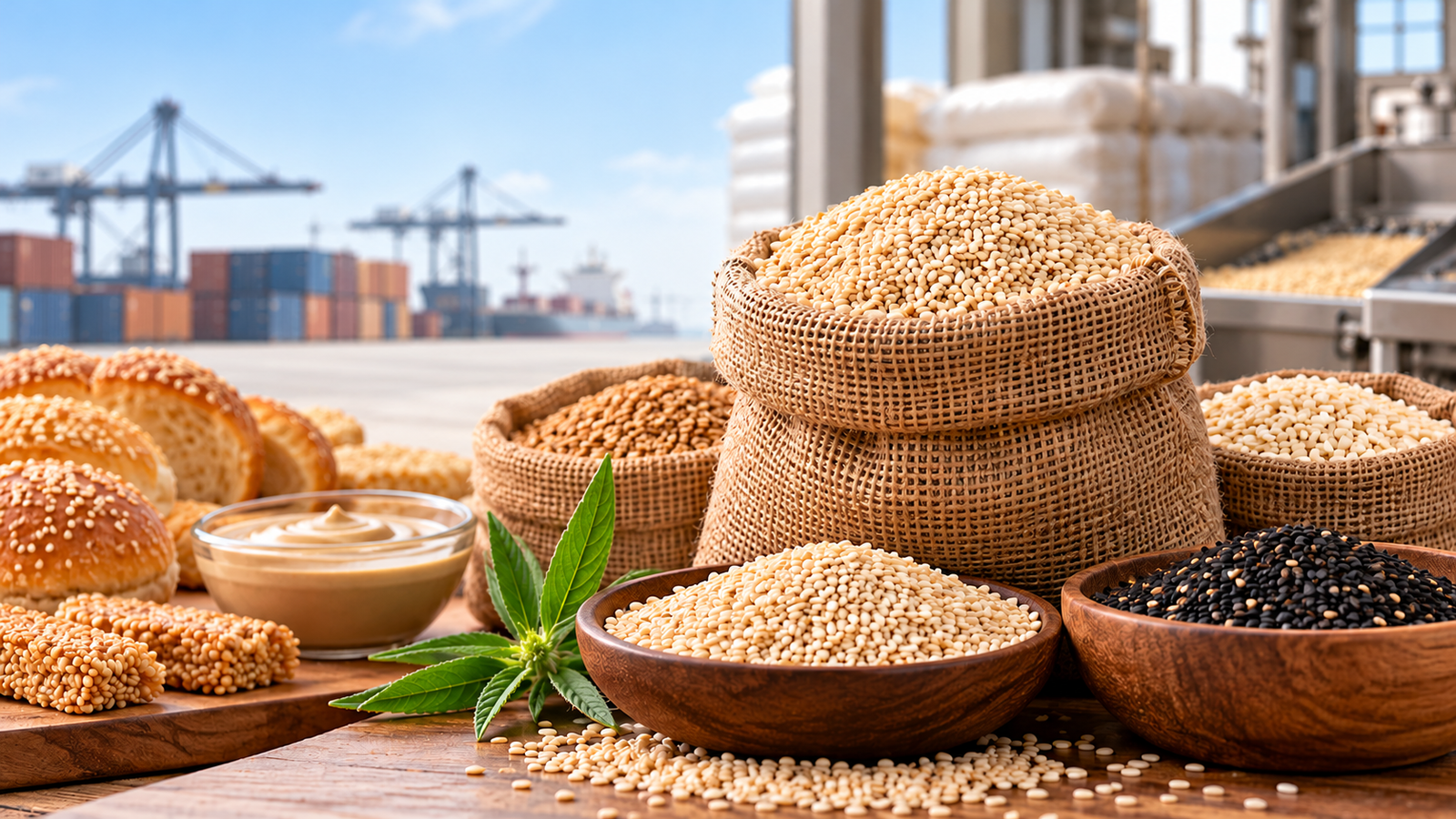
Food manufacturers depend on consistent ingredients to maintain product quality and meet production schedules. Sesame seeds are widely used in bakery products, tahini, confectionery, snack foods, and edible oil production. However, purchasing sesame in large quantities requires more planning than placing a standard ingredient order.
A bulk sesame seeds supplier must be able to provide a product that performs well during manufacturing and meets the buyer’s agreed quality requirements. Even small differences in seed size, color, moisture, or processing can affect the finished product.
For example, a bakery may need sesame seeds that remain evenly distributed on bread, while a tahini manufacturer may focus on the texture and flavor of the final paste. Both businesses purchase sesame, but their production needs are different.
The challenge for purchasing teams is finding a supplier that can maintain these requirements across repeated deliveries while offering suitable prices and dependable supply.
This guide explains how food manufacturers can assess bulk sesame suppliers, approve raw materials for production, compare actual purchasing costs, and build a reliable sesame supply plan.
- How Food Manufacturers Should Choose a Bulk Sesame Seeds Supplier
- Sesame Seed Requirements for Different Food Manufacturing Industries
- How to Approve a Bulk Sesame Seeds Supplier for Manufacturing
- Why Batch Consistency Matters in Sesame Seed Manufacturing
- How to Calculate the Actual Cost of Bulk Sesame Seeds
- Planning Bulk Sesame Purchases Around Production Demand
- What to Include in a Bulk Sesame Seed Purchase Agreement
- Building a Supplier Performance Scorecard
- Questions to Ask Before Selecting a Bulk Sesame Seeds Supplier
- Why Consider FieldFusion Corp as Your Bulk Sesame Seeds Supplier?
- FAQs
- How do food manufacturers choose a bulk sesame seeds supplier?
- Why are production trials important when buying sesame seeds?
- How can manufacturers maintain consistent sesame quality?
- Is the cheapest bulk sesame supplier always the best option?
- What documents should a sesame supplier provide?
- Can manufacturers arrange regular bulk sesame shipments?
- Does FieldFusion Corp offer sesame seeds for food manufacturing?
- How can I request a bulk sesame seed quotation from FieldFusion Corp?
How Food Manufacturers Should Choose a Bulk Sesame Seeds Supplier
Food manufacturers should choose a bulk sesame seeds supplier based on product quality, food safety records, production performance, and supply capacity.
A suitable supplier should provide clear product specifications, support sample testing, and maintain agreed quality standards across regular deliveries. Buyers should also compare the total cost of usable sesame before approving a supplier.
A suitable sesame supplier should understand how the ingredient will be used in the buyer’s production process.
For manufacturers, the purchasing decision involves several departments. Procurement teams review pricing and supply terms, quality teams assess food safety and product specifications, and production teams confirm whether the ingredient works with existing equipment and recipes.
A supplier may offer an attractive price, but the product still needs to pass these checks before it becomes an approved manufacturing ingredient.
Match Sesame Specifications With the Finished Product
Different food products require different sesame characteristics.
Bakery manufacturers may focus on seed appearance, size, and how the sesame performs during baking. Tahini producers may need a particular texture, flavor, and oil content. Snack manufacturers may require seeds that meet specific roasting and seasoning requirements.
Before contacting suppliers, manufacturers should prepare a written ingredient specification based on their production process.
This document should identify the required sesame type, quality limits, packaging format, and any additional technical requirements.
Assess the Supplier’s Ability to Support Production
Food manufacturers often operate on fixed production schedules. A delay in receiving raw materials can affect planned output and customer deliveries.
Manufacturers should therefore ask potential suppliers about their order lead times, sourcing arrangements, available quantities, and ability to support repeat purchases.
A supplier that can deliver one successful trial order may not necessarily have the capacity to support regular commercial production.
Purchasing teams should discuss their expected monthly or annual demand before making a long-term commitment.
Quick link: Top Sesame Seeds Exporters in Pakistan
Sesame Seed Requirements for Different Food Manufacturing Industries
The final application should guide the choice of sesame grade. Manufacturers can avoid unnecessary processing costs by selecting a product that matches their production requirements.
Sesame Seeds for Bakery Manufacturers
Sesame is commonly used as a topping for bread, buns, crackers, and other baked products.
For these applications, manufacturers may need seeds with consistent color, suitable size, and low levels of unwanted material.
The appearance of sesame can influence the finished product, particularly when the seeds remain visible after baking.
Bakery purchasing teams should test how the seeds behave during application, baking, and packaging before approving a supplier.
Sesame Seeds for Tahini Manufacturers
Tahini production places particular importance on the quality of the sesame used for grinding.
Hulled sesame is commonly selected for tahini because removing the outer covering can help produce a smoother texture and lighter appearance.
Manufacturers should assess flavor, oil content, seed condition, and grinding performance during production trials.
A sample that looks acceptable may still produce a different texture or flavor when processed using the manufacturer’s equipment.
Sesame Seeds for Confectionery and Snack Manufacturers
Sesame is used in sweets, snack bars, coated products, and other prepared foods.
These applications may require particular seed sizes, colors, or roasting characteristics.
For products where sesame contributes strongly to flavor, manufacturers should assess the taste and aroma of the finished product rather than relying only on the appearance of the raw ingredient.
Consistency is especially important for branded products that customers expect to taste the same with every purchase.
Sesame Seeds for Edible Oil Manufacturers
Edible oil manufacturers often focus on oil content, seed condition, and the performance of sesame during extraction.
The amount of usable oil obtained from a batch can affect manufacturing costs.
Purchasing teams should compare sesame grades using relevant oil-content test results and actual processing performance.
A lower purchase price may offer limited savings if the product produces less usable oil or requires additional preparation.
Manufacturing Application Comparison
| Manufacturing industry | Important buying considerations | Suggested evaluation |
| Bakery | Seed appearance, size, cleanliness, application performance | Baking trial and visual inspection |
| Tahini | Flavor, texture, oil content, grinding performance | Small production trial |
| Confectionery | Color, flavor, seed condition, product consistency | Finished-product testing |
| Snacks | Roasting behavior, flavor, appearance | Processing and sensory trial |
| Edible oil | Oil content, extraction performance, seed condition | Laboratory testing and extraction trial |
These are general purchasing considerations. Each manufacturer should set its own acceptance limits based on the finished product and applicable food safety requirements.
How to Approve a Bulk Sesame Seeds Supplier for Manufacturing
Supplier approval is one of the most important stages of industrial ingredient purchasing.
The approval process helps manufacturers confirm that a supplier can meet their requirements before large quantities of sesame enter regular production.
Step 1: Review Supplier Information
The first stage is to collect basic information about the supplier’s business, product range, sourcing arrangements, and quality management practices.
Manufacturers should confirm which sesame products are available and whether the supplier can meet their required specifications.
For international purchasing, buyers should also review the supplier’s experience with the intended destination market and its ability to provide the required documentation.
Step 2: Request Technical Documents
A supplier should provide enough information for the manufacturer’s quality team to evaluate the product. The US Food and Drug Administration’s food safety preventive controls explain how covered food facilities must identify and manage food safety hazards.
Documents may include product specification sheets, relevant laboratory test results, allergen information, and applicable food safety certificates.
Manufacturers should confirm that the documents relate to the product being offered.
Where testing is required, the agreed limits and test methods should be clearly recorded.
Step 3: Evaluate a Representative Sample
A product sample helps the manufacturer assess sesame before purchasing a commercial quantity.
However, the sample should represent the grade and processing method that will be supplied in future orders.
The quality team may assess appearance, moisture, foreign material, and other relevant characteristics.
Manufacturers should record the sample results so they can compare them with later deliveries.
Step 4: Conduct a Production Trial
A production trial provides information that laboratory results alone may not show.
For example, a tahini manufacturer can assess how the sesame performs during grinding, while a bakery can check how the seeds behave during application and baking.
Trial results should be compared with the manufacturer’s normal production requirements.
If the product performs as expected, the manufacturer can proceed with commercial approval under its internal procedures.
Step 5: Establish Ongoing Supplier Controls
Approval should not end after the first successful order.
Manufacturers should maintain an approved supplier record and define how future deliveries will be checked.
This may include routine document reviews, incoming inspections, periodic testing, and supplier performance reviews.
The frequency of these checks should reflect the product’s risks, the supplier’s performance, and the manufacturer’s food safety system.
Why Batch Consistency Matters in Sesame Seed Manufacturing
Food manufacturers need ingredients that perform consistently across production batches.
Changes in sesame color, moisture, flavor, or processing characteristics may affect the finished product even when the product remains within broad commercial descriptions.
For manufacturers producing the same recipe throughout the year, these changes can create extra adjustments during production.
Managing Differences Between Shipments
Sesame is an agricultural product, so natural differences may occur between growing seasons, sourcing areas, and batches.
Manufacturers should define acceptable limits for the characteristics that matter most to their products.
These limits help the supplier understand what can be accepted and when a change requires further review.
For example, a tahini producer may need to review a change in seed flavor or oil content, while a bakery may be more concerned about visible color differences.
Why Batch Identification Is Important
Each delivery should be identifiable through batch or lot information.
This allows manufacturers to connect received sesame with the supplier’s documents, test results, and internal production records.
Batch identification also supports investigations if a quality problem is found after the ingredient has entered production.
Manufacturers should confirm how suppliers identify their products and whether relevant records can be provided when needed.
Establishing a Consistent Quality Review
Purchasing and quality teams should review supplier performance over time rather than judging every delivery separately.
Repeated changes in product characteristics may indicate that the supplier’s sourcing or processing controls need further discussion.
A record of accepted and rejected deliveries can help manufacturers identify these patterns and make better purchasing decisions.
How to Calculate the Actual Cost of Bulk Sesame Seeds
The quoted price per kilogram is only one part of the cost of purchasing sesame for manufacturing.
Manufacturers should also consider the amount of usable product received and any additional processing needed before the ingredient can enter production.
Purchase Price vs. Usable Ingredient Cost
Consider two hypothetical sesame suppliers offering the same quantity.
| Cost factor | Supplier A | Supplier B |
| Purchase price per kg | $1.40 | $1.48 |
| Purchased quantity | 10,000 kg | 10,000 kg |
| Usable quantity after cleaning and rejection | 9,700 kg | 9,950 kg |
| Total purchase cost | $14,000 | $14,800 |
| Cost per usable kg | $1.44 | $1.49 |
Illustrative figures only. These are not actual supplier quotations or verified sesame quality results.
How to Calculate Cost per Usable Kilogram
Food manufacturers can calculate their actual ingredient cost by dividing the total purchase cost by the amount of usable sesame received.
Cost per usable kg = Total purchase cost ÷ Usable sesame quantity
For example, if a manufacturer purchases 10,000 kg of sesame for $14,000 and receives 9,700 kg of usable material after cleaning, the cost per usable kilogram is approximately $1.44.
This calculation helps purchasing teams compare suppliers using the quantity of sesame available for production. Additional cleaning, testing, freight, and handling costs should also be included when calculating the full cost of supply.
In this example, Supplier A remains less expensive after accounting for the difference in usable quantity.
However, if Supplier A requires additional cleaning, testing, labor, or production time, the final cost comparison may change.
Manufacturers should calculate the total cost using their actual processing data rather than assuming that a lower price always produces greater savings.
Costs That Purchasing Teams Should Include
The total cost of sesame supply may include the purchase price, freight, inspection, laboratory testing, customs charges, storage, handling, and any processing losses.
Some costs depend on the supplier’s commercial terms, while others arise after the product reaches the manufacturing facility.
A fair comparison should use the same product requirements and delivery conditions for each quotation.
Quick link: How to Choose a Reliable Agricultural Export Partner
Planning Bulk Sesame Purchases Around Production Demand
Manufacturers that purchase sesame regularly need to balance available stock with expected production requirements.
Buying too little can create supply shortages, while buying more than the business can store properly may increase costs and product risks.
Forecast Monthly and Annual Requirements
Procurement teams should work with production planners to estimate how much sesame will be needed during the coming months.
These estimates should consider planned output, recipe requirements, expected sales, and existing stock.
Sharing reasonable demand forecasts with suppliers may help both parties plan future orders.
However, forecast quantities should be clearly distinguished from confirmed purchase commitments.
Understand Supplier Lead Times
Lead time is the period between placing an order and receiving the product.
For imported sesame, this can include preparation, processing, inspection, shipping, customs clearance, and inland transport.
Manufacturers should discuss realistic lead times with suppliers and plan orders around their production schedules.
Where appropriate, purchasing teams can also consider extra stock to protect against unexpected delays.
Plan for Seasonal Supply Changes
Agricultural supply can change with harvesting periods, weather conditions, and market demand. These changes may affect the availability of particular sesame grades.
The CBI sesame seed market entry guide also explains the quality, buyer, and market requirements that exporters should consider when supplying sesame seeds internationally.
Manufacturers should discuss seasonal sourcing arrangements with suppliers, especially when they require the same product characteristics throughout the year.
Long-term planning can help businesses identify possible supply concerns before they affect production.
What to Include in a Bulk Sesame Seed Purchase Agreement
A clear purchase agreement helps manufacturers and suppliers understand their responsibilities.
For repeat orders, the agreement should define the product being purchased and the conditions under which it will be accepted.
Product Specifications and Quality Acceptance
The agreement should identify the sesame grade and relevant quality limits.
These may include purity, moisture, foreign matter, processing type, and any additional characteristics required for the manufacturer’s application.
It should also explain how the product will be sampled, tested, and accepted.
Where independent inspection is required, both parties should agree on the inspection arrangements before shipment.
Delivery Schedule and Order Quantity
The agreement should state the confirmed order quantity, packaging format, delivery location, and expected shipment schedule.
For regular purchases, manufacturers may also agree on how future orders will be released and confirmed.
Any minimum order quantities or limits on available supply should be discussed before signing.
Payment and Shipping Responsibilities
Payment terms should be clear to both parties.
For international transactions, the agreed Incoterms rule should identify the responsibilities for delivery, transport costs, and risk transfer.
Buyers should review the International Chamber of Commerce’s Incoterms 2020 rules before accepting shipping terms such as FOB, CFR, or CIF.
Handling Quality Differences
The agreement should explain what happens if the delivered product does not meet the agreed specifications.
This may include inspection procedures, reporting deadlines, supporting evidence, and the process for resolving a claim.
Clear terms can reduce disputes and help both parties manage problems professionally.
Building a Supplier Performance Scorecard
A supplier scorecard allows manufacturers to compare performance across several deliveries.
Instead of relying only on the latest price or the results of one order, purchasing teams can review how reliably each supplier meets agreed requirements.
Suggested Sesame Supplier Evaluation Scorecard
| Performance area | Suggested weight | What to measure |
| Product quality | 30% | Deliveries meeting agreed specifications |
| Food safety and documentation | 25% | Required records and test results provided |
| Delivery reliability | 20% | Orders received within the agreed delivery window |
| Cost performance | 15% | Total cost compared with agreed commercial terms |
| Communication and issue handling | 10% | Response to questions and resolution of problems |
| Total | 100% |
These weights are an illustrative procurement framework, not an industry standard. Manufacturers should adjust them to match their own risk assessment and business priorities.
A food manufacturer with strict safety requirements may give more weight to food safety controls, while a business with highly sensitive production schedules may place greater emphasis on delivery performance.
The scorecard should support purchasing decisions, but it should not replace mandatory food safety and quality requirements.
Questions to Ask Before Selecting a Bulk Sesame Seeds Supplier
Before approving a supplier, manufacturers should request clear answers to the following questions:
- Which sesame grades and processing options are available for our manufacturing application?
- Can you supply a written product specification with measurable quality limits?
- Which food safety documents and laboratory results can you provide?
- Can you supply representative samples for technical review and production trials?
- How do you maintain consistency between different batches and shipments?
- What are your minimum order quantities and expected lead times?
- Can you support our forecast monthly or annual requirements?
- Which packaging formats and shipping arrangements are available?
- How are quality differences and delivery problems handled?
- What information do you need to prepare an accurate commercial quotation?
These questions help procurement teams gather comparable information before committing to a new supply relationship.
Why Consider FieldFusion Corp as Your Bulk Sesame Seeds Supplier?
Food manufacturers sourcing sesame in bulk need access to suitable product grades and clear information about quality, quantities, and delivery arrangements.
FieldFusion Corp, part of Iqbal Group of Companies, is a Pakistan-based agricultural export business that connects Pakistani agricultural products with international markets.
Sesame seeds are part of FieldFusion’s export portfolio, with product options that support different food manufacturing needs.
The company’s sesame range includes natural machine-cleaned sesame seeds, natural color-sorted sesame seeds, hulled sesame seeds, and hulled roasted sesame seeds.
These options allow food manufacturers to discuss suitable grades for bakery production, tahini, confectionery, snacks, and other food applications.
Sesame seed purity is an important consideration for food manufacturers because it can affect cleaning requirements and the amount of usable material.
FieldFusion has shared information about sesame purity and quality on its official LinkedIn page, giving buyers an additional reference when reviewing its sesame products.
Manufacturers should also request current product specifications and relevant quality test results before confirming an order.
FieldFusion also handles other agricultural commodities, including rice, corn, and Rhodes grass, which may be relevant to buyers sourcing several products from Pakistan.
Manufacturers can contact the FieldFusion export team to discuss their required sesame type, product specifications, order quantities, packaging, and delivery destination.
For technical purchasing decisions, buyers should request current product specifications, relevant quality documents, available quantities, and commercial terms before confirming an order.
Looking for a bulk sesame seeds supplier for your business?
Explore FieldFusion’s sesame seed product portfolio or contact FieldFusion Corp to discuss your bulk sourcing requirements and request product information.
FAQs
How do food manufacturers choose a bulk sesame seeds supplier?
Food manufacturers should review the supplier’s product specifications, food safety controls, supply capacity, and ability to maintain consistent quality. Samples and production trials can help confirm whether the sesame performs as required before commercial approval.
Why are production trials important when buying sesame seeds?
Production trials allow manufacturers to assess how sesame behaves in their actual manufacturing process. They can reveal differences in appearance, flavor, texture, and processing performance that may not be clear from a product sample or laboratory report alone.
How can manufacturers maintain consistent sesame quality?
Manufacturers should establish written product specifications, approve suppliers through a structured process, check incoming deliveries, and review quality records across different batches. Clear communication about acceptable product changes is also important.
Is the cheapest bulk sesame supplier always the best option?
No. Manufacturers should compare the cost of usable sesame after accounting for processing losses, testing, transport, and other purchasing expenses. A lower initial price may not provide the lowest total manufacturing cost.
What documents should a sesame supplier provide?
Depending on the product and destination market, buyers may require technical specification sheets, certificates of analysis, allergen information, food safety records, and relevant shipping documents. Requirements should be agreed before purchase.
Can manufacturers arrange regular bulk sesame shipments?
Regular shipments may be possible when the supplier has suitable sourcing arrangements and available capacity. Manufacturers should discuss expected order quantities, delivery schedules, and seasonal supply conditions before making a long-term agreement.
Does FieldFusion Corp offer sesame seeds for food manufacturing?
FieldFusion Corp offers natural machine-cleaned, natural color-sorted, hulled, and hulled roasted sesame seeds in its export portfolio. Food manufacturers can contact the company to discuss current product availability and specifications.
How can I request a bulk sesame seed quotation from FieldFusion Corp?
Visit the FieldFusion Corp contact page and share your required sesame type, expected quantity, product specifications, packaging needs, and delivery destination. These details will help the export team review your inquiry.
Comments are closed